

A single song usually takes an engineer a few hours of hands-on mixing, but the turnaround you experience is calendar time: a few days to a couple of weeks for a single, and a month or more for an album once scheduling and revisions are counted. The gap between those two numbers is where most artists get frustrated. Let’s walk through where the time actually goes, and how you can shorten it.
TL;DR
- Hands-on mixing runs from about 45 minutes to a few hours per song for working pros, and from a day to several days for dense or messy productions.
- Turnaround is calendar time: engineer availability, your feedback and revision rounds often add more days than the mixing itself.
- A six-song EP is realistically a two-week project before revisions, and a 12-song album is about a month.
- Clean sessions, a clear reference track and one consolidated round of notes are the three cheapest ways to get your mix back sooner.
- Mixing and mastering are separate timelines. Mastering a finished single can take about an hour of work.
Table of Contents
- Hands-on mixing time versus turnaround time
- How long does it take to mix one song?
- What makes a mix take longer
- Mixing an EP or an album
- Mixing turnaround versus mastering turnaround
- A realistic timeline to plan around
- How to get your mix back faster
- Rush jobs: what you are really paying for
- Our perspective on turnaround
- Working with us on your next mix
- FAQ
- Sources
Hands-on mixing time versus turnaround time
These are two different things, and most confusion comes from mixing them up.
Hands-on time is how long an engineer actually spends with your session open. Turnaround time is how long it takes from the day you send files to the day you approve the final mix. It includes the queue before your song gets touched, the first pass, your listening, your notes, the revisions and the final bounce.
A mix that takes three hours of work can still take a week to reach you, because the engineer is finishing other projects first and you need a day or two to listen on different speakers. TrackBloom’s guidance on mix turnaround makes the same point: engineer availability, sequential versus batch scheduling, client feedback and revision cycles decide when an EP or album is truly finished.
When you ask any engineer for a timeline, ask which one they mean.
How long does it take to mix one song?
The honest answer is a range, and the range is wide. Here is what working engineers have said on the record.
| Engineer | Reported pace | Context |
|---|---|---|
| Billy Decker | About 45 minutes per song, around three songs a day | Nashville album work, as described in Sound On Sound |
| Zakk Cervini | Two to four hours per final mix; up to three songs a night when pushing | Rock album sessions, per Sound On Sound |
| Sean Donoghue | One to two hours with his template, around four if there is a problem | Hip-hop and UK rap, Sound On Sound |
| Bob Clearmountain | Normally two songs a day when arrangements are good; a complicated song can take a day or more | Tape Op interview |
| Mike Senior | A few hours per song up to more than two weeks; three or four mixes in a day on occasion | Sound On Sound advice column |
Look at who these people are. Most are top-tier engineers working from templates, with strong recordings handed to them and, often, assistants preparing the sessions. iZotope notes that a professional’s ability to mix several songs a day is often supported by assistants who handle setup, organization and rough balancing so the mixer can focus on creative processing.
That is why a DIY artist should not expect the same numbers from a first-time session. The fast figures describe the engineer’s best case on a well-recorded song. Your song may be that case, and it may not.
What makes a mix take longer
Mike Senior lists the real drivers in his answer on mix time: production values, the target style and market, timing and tuning issues, recording problems or omissions, and how much creative production work the mix needs. In plain language, six things control your turnaround.
1. Track count and arrangement
A singer-songwriter song with 6 to 12 tracks might take a few hours. According to iZotope, a complex pop or electronic production with track counts in the triple digits might take a day to a few days. More layers mean more decisions, more automation and more things that can clash.
2. Recording quality
This is the big one for independent artists. A well-recorded vocal and a tight rhythm section mix quickly. Noisy takes, clipped peaks, mismatched room sounds and missing parts do not. Senior says remedial work such as editing timing and tuning can add a day or so, and he reports that his Mix Rescue projects typically take three to five days.
3. Production work hiding inside the mix
If the song still needs a bass part replaced, drums reprogrammed or a vocal comped from twelve takes, that is production, not mixing. Senior notes that a project with substantial correction or production work can run past two weeks. Settle those decisions before you send the session.
4. Genre and target sound
A stripped acoustic record and a layered pop record ask very different things of an engineer. Senior’s own range runs from a few hours for a small acoustic session to two or three days for a dense, chart-oriented production.
5. The engineer’s workflow
Templates matter. Donoghue says his template gets a mix done in one to two hours unless something is wrong. An engineer who has your genre set up in advance starts at 70 percent. One who builds from scratch starts at zero.
6. Your feedback loop
This is the part nobody puts in the quote. Decker’s 45-minute average is for the first pass. Client notes and repeated tweaking, he says, can continue over several weeks or even a month.
Mixing an EP or an album
Singles are simple arithmetic. Albums are not, because the engineer has to keep songs consistent with each other and you have to hear them in sequence.
TrackBloom’s June 2026 guidance puts a six-song EP at roughly one song per working day, which makes it a minimum two-week project before any revision rounds. A 12-song album mixed sequentially is about a month of calendar work. Treat those as planning figures from one industry source rather than a rule, but they match what most artists experience when scheduling is included.
Two practical consequences:
- Ask for a batch plan. Some engineers mix the first song, get your approval, then use it as the sonic template for the rest. That protects you from fixing the same note on eight songs.
- Approve in rounds. Send notes per song as they arrive, not in one giant list at the end.
Albums are also where mix and master timelines start to overlap, which brings us to the next point.
Mixing turnaround versus mastering turnaround
They are separate stages with separate clocks.
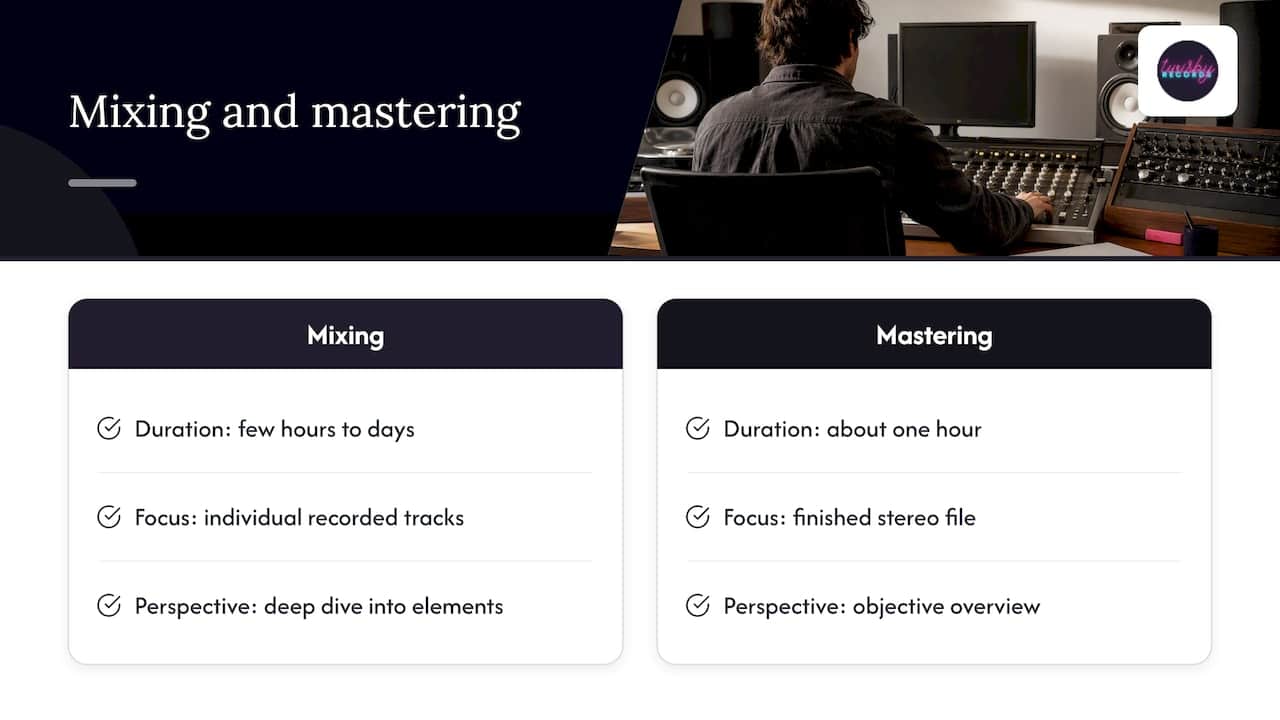
Mixing blends the individual recorded tracks into a stereo file. Mastering works on that finished stereo file. According to iZotope, mixing can take a few hours to a few days depending on complexity, while mastering a single can take about an hour. iZotope also describes the difference in perspective: a mixer does a deep dive into individual elements to define the song’s vibe, while a mastering engineer keeps an objective overview to catch final errors across the whole release.
For an album, that means mastering is where the whole running order is judged together, so it cannot be finished until the last mix is approved. If you plan a release date, count backward: master, then final mix approval, then the mix queue, then your own file prep. We cover how format affects the final stage in our guides to mastering for CD and mastering for vinyl, and if you are aiming for streaming-store quality, see how to get Apple Digital Masters.
A realistic timeline to plan around
These are planning ranges built from the engineer figures above, not promises from any one studio. Use them to sanity-check a quote.
| Project | Hands-on mixing | Calendar time to expect |
|---|---|---|
| Simple single (under about 20 tracks, clean recording) | A few hours | Several days to about a week, including one revision |
| Dense single (many layers, lots of vocal stacks) | A day to a few days | One to two weeks |
| Single needing repair or production work | Three to five days or more | Two weeks or more |
| Six-song EP | About one song per working day | Two weeks minimum, more with revisions |
| 12-song album | About a month sequentially | A month or more |
If an engineer promises a full album in two days, ask what they are giving up. If an engineer needs six weeks for one acoustic song, ask what is in the queue.
How to get your mix back faster
You control more of the schedule than you think. Here is the order I would work in.
- Finish the production first. No “I’ll add a bass part later.” Unfinished arrangements are the top cause of reopened mixes.
- Clean up your session. Label every track, remove unused takes, and consolidate edits. Mark your preferred take for each vocal line.
- Export every track from the same start point. Make sure all files begin at bar one so they line up on import. Use a high sample rate and bit depth you recorded at; our guide to choosing a sample rate explains the trade-offs.
- Send one or two reference tracks and say what you like about each: the vocal level, the low end, the width. Two sentences here save a revision round.
- Send a rough mix of how you currently hear it, so the engineer knows your intent.
- Write consolidated notes. Listen on headphones, a car and a phone speaker, then send one list with timestamps. Five separate emails over five days restart the engineer’s clock each time.
- Say your deadline up front. If the release date is fixed, tell the engineer at booking, not after the first mix.
Prep also affects price. Our breakdown of what mixing costs for DIY artists shows how clean sessions lower the per-track number as well as the turnaround.
Rush jobs: what you are really paying for
Rush fees exist because a fast turnaround means the engineer moves your song ahead of paid work already in the queue. That is a fair trade, and it works best when the mix itself is simple. Rushing a repair-heavy session usually backfires: problems get patched instead of solved, and you spend the saved days on revisions.
A better move than a rush fee is booking early. Tell your engineer your release date six to eight weeks ahead and you get the same result at the normal rate.
Our perspective on turnaround
We have mixed and mastered independent music for over 35 years, and the pattern is consistent: the mix is rarely what makes a release late. Late files, unfinished parts and a long chain of small revision requests do.
We work with each artist on their own track rather than running songs through a template-and-preset assembly line, and we use real analog gear alongside digital tools. That personal attention does not slow things down. It speeds them up, because we ask the right questions on day one: who is the song for, what is the reference, and what is the release date? Those three answers usually remove more time than any plugin.
Our advice is simple. Do not ask how many hours a mix takes. Ask when you will hear the first pass, how many revision rounds are included, and what the engineer needs from you to hit your date. Then send clean files and consolidated notes.
— Kreg
Working with us on your next mix
If you are planning a release and want a straight answer on timing, we will look at your session, tell you what it needs and give you a realistic delivery window before you commit. You can start on our mixing page. Mastering for a finished mix is a flat $50 per song on the mastering page.

Mixing does not have a published price, so we quote after hearing what you have. If you also want help getting the release heard, our advertising packages run Facebook and Instagram campaigns for music releases, and they can be timed to land the day your master is ready.
FAQ
How long does it take to mix a song?
The hands-on work ranges from under an hour for an experienced engineer with a template to several days for a dense or messy session. Billy Decker averages 45 minutes per song on album work, and Mike Senior has seen a few hours stretch past two weeks when heavy correction is involved. For your release, expect several days to a week from handoff to approval for a clean single.
Why does mixing take longer than the engineer says it will?
Usually because the quoted figure is hands-on time while you experience calendar time. Queue position, your listening time and revision rounds all add days. Client notes and repeated tweaking can stretch a mix that took 45 minutes on the first pass into several weeks.
How long does it take to mix an EP or album?
Plan for about two weeks for a six-song EP and about a month for a 12-song album, before revisions, if the songs are mixed one after another. Approving the first song early and using it as the reference for the rest keeps the schedule from sliding.
Is mastering faster than mixing?
Yes, for a single. Mastering works on one stereo file and can take about an hour of hands-on work, while mixing can run from a few hours to a few days. On an album, though, mastering waits until every mix is approved, so the last mix sets your final date.
Sources
- Q. How long should I spend on a mix? (Sound On Sound)
- Inside Track: Chris Young ‘Losing Sleep’ (Sound On Sound)
- Inside Track: Blink 182, California (Sound On Sound)
- Inside Track: Central Cee ‘Straight Back To It’ (Sound On Sound)
- Bob Clearmountain interview (Tape Op #129)
- How long does it take to mix and master a song? (iZotope)
- Mix Turnaround Time: How to Set It and Charge for Rush Jobs (TrackBloom)