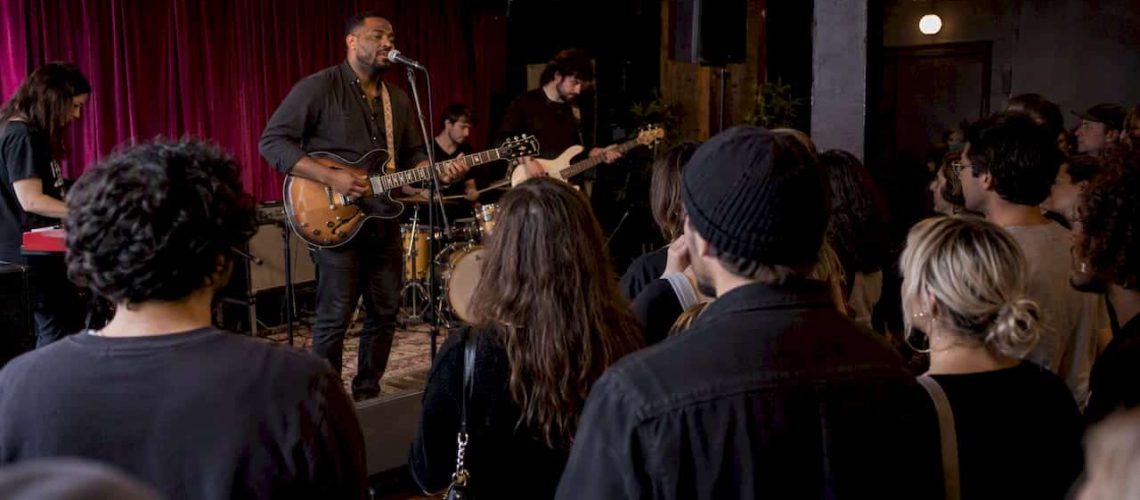

The best way to promote a gig is to treat it as its own small campaign: confirm the details, give people one clear place to get tickets, start early, and talk to the people most likely to come instead of everyone at once. Below are the ideas that work for independent artists, in the order you would use them, from the first announcement to the follow-up after the last song.
TL;DR
- Lock the date, venue, billing, and ticket link before you post anything. One link, used everywhere.
- Start early and phase it: announcement, targeted posts, logistics, countdown.
- Your email list and your most loyal listeners will outperform any broad blast.
- Local partners, other bands’ fans, and small paid ads can fill the gaps organic posts leave.
- Collect emails at the show and track results so the next date is easier.
Table of Contents
- Start with the show, not the post
- A promotion timeline you can actually follow
- Ideas that cost nothing but time
- Creative gig promotion ideas worth trying
- Use Spotify to find the people most likely to come
- Paid promotion: when a small budget makes sense
- Perspective: why we’d start with the music, then the ads
- Where Twisby Records fits
- Show day and the days after
- Common mistakes
- FAQ
- Sources
Start with the show, not the post
Most promotion fails before it starts, because the basics are shaky. Confirm the date, venue, lineup, set times, and any age restriction. Ask the booker what a realistic crowd looks like for that room and that night. A guide on promoting local shows makes the same point: realistic capacity and ticket planning come first.
Then pick one ticket link. If fans see three different links across three platforms, some will give up. A single consistent link keeps the path to tickets clean, and that’s what you put in your bio, your posts, your email, and your flyer’s QR code.
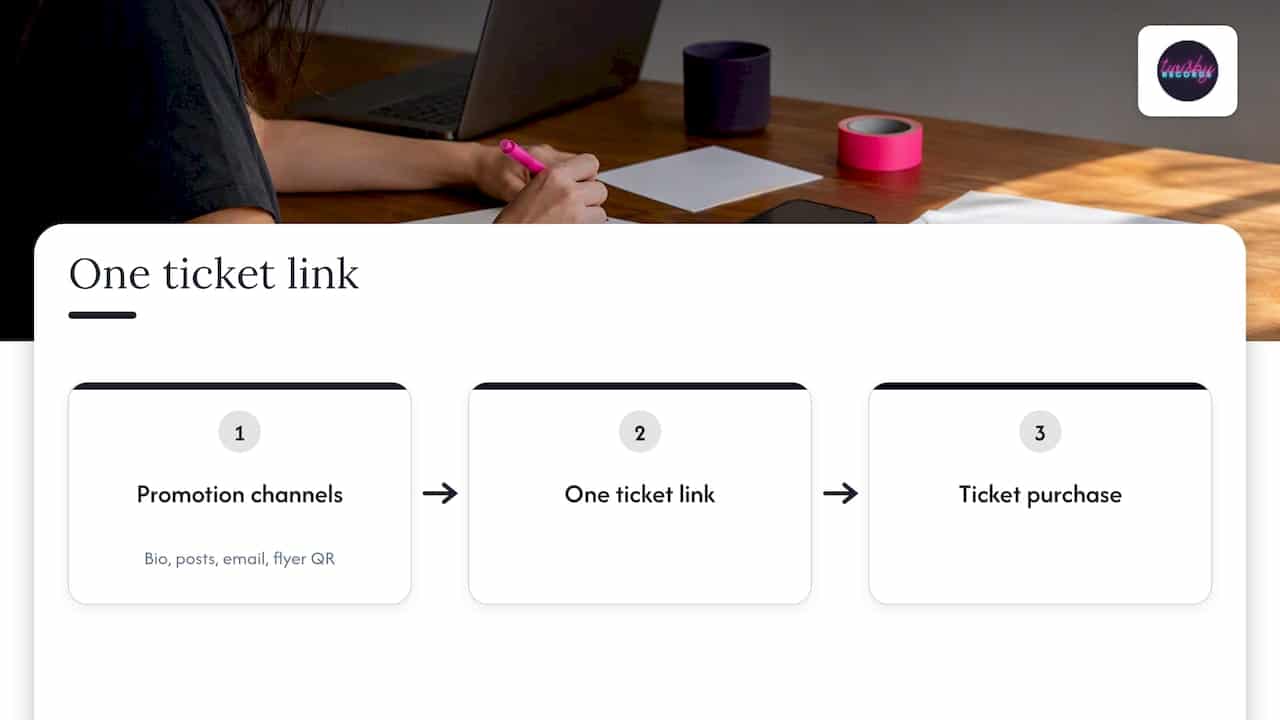
If you’re selling tickets yourself or helping a venue do it, the logic of ticketing software for music venues is worth a read before you choose a setup. The goal is the same: confirmed event details and a clear route from interest to purchase.
Finally, treat each date as its own campaign. A Saturday in Pittsburgh and a Tuesday in Columbus need different timelines, different local contacts, and different audiences. Copy-pasting one post for every city is the fastest way to be ignored in all of them.
A promotion timeline you can actually follow
One guide suggests starting six to eight weeks ahead for a weeknight show and three to four weeks ahead for a weekend. Treat that as a sensible rule of thumb, not a law. Small rooms with loyal crowds can move faster. Out-of-town dates with no built-in audience need longer.
Here’s a simple phased plan:
- Announcement (first week). Post the date, venue, lineup, and ticket link. Send the same news to your email list first, then social. Your list gets the first look.
- Targeted posts (middle weeks). Share a rehearsal clip, a new song you’ll debut, a story about the venue. Each post should give one reason to come.
- Logistics (final two weeks). Doors, set times, parking, age limits, merch. People skip shows over small uncertainties.
- Countdown (final week). Short, specific posts: who’s on at what time, a clip of the closing song, a last reminder with the link.
- Day of. One post in the morning, one story near doors. Nothing more.
Ideas that cost nothing but time
Show people the work behind the show
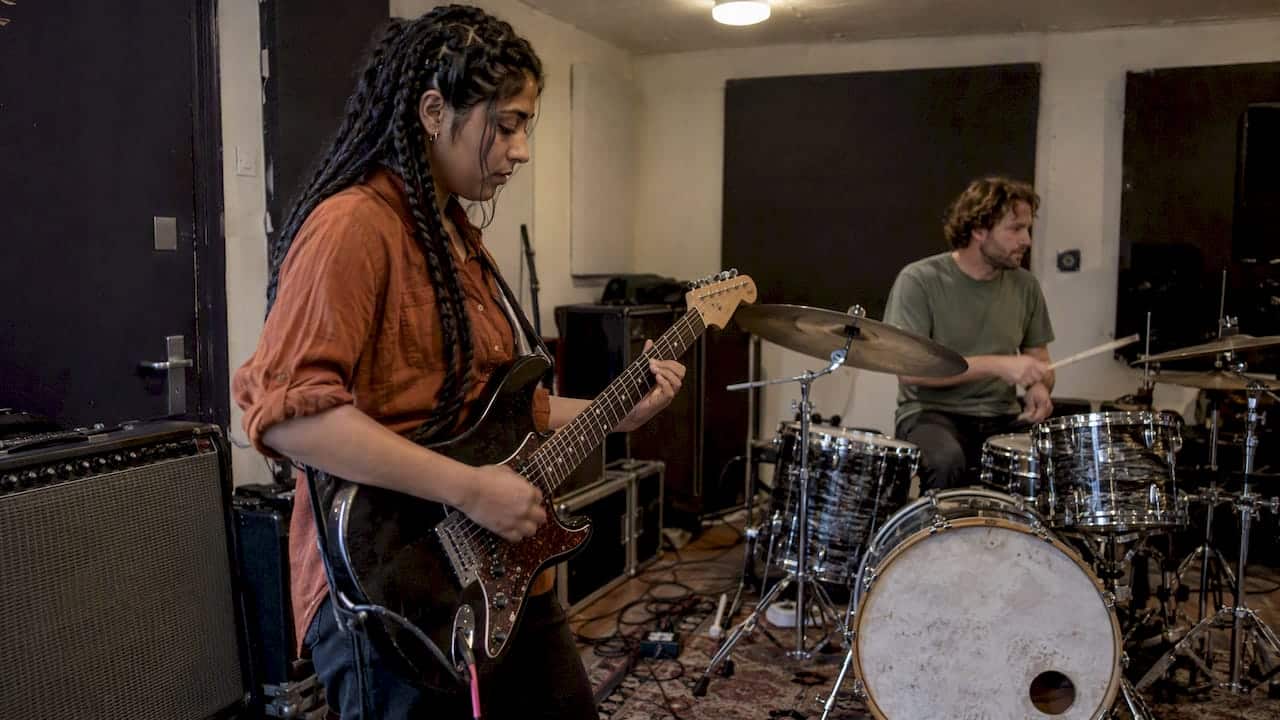
Behind-the-scenes and rehearsal content works well for gig promotion. It gives followers something to react to besides “come to my show.” A phone video of you working out a transition, a setlist taped to an amp, a ten-second clip of the new song: these are small, honest, and easy to repeat.
Build the email list first
Social algorithms decide who sees your post. Email doesn’t. A list of even 100 people who chose to hear from you is a direct line to the ones who might actually buy a ticket. Put a sign-up link in your bio, and use it for every announcement. The same advice shows up in official guidance on booking your own shows, which also tells artists to plan for collecting emails at the merch table.
Put up posters, with permission
Printed posters still work locally when placed well: venue noticeboards, record shops, cafés, and student unions are common spots, with permission. Ask first, keep the design readable from six feet away, and always put the date and ticket link or QR code in the largest type after the band name.
Get the local press and scene groups involved
Send a short note to local music writers, college radio, and scene-specific community pages. Make it easy: one paragraph, one photo, the date, the link. Combining digital outreach with local press, radio, and community partnerships is a consistent recommendation from people who promote shows for a living.
Work with the other bands
Share-ready materials are your best tool. Send every act on the bill a graphic, a caption, and the link. Target fans of acts with a similar sound, not the biggest accounts you can find. One show-promotion guide notes that genre overlap beats raw follower count for local shows, and it matches what most working bands see: 200 people who like your kind of music beat 20,000 who don’t.
Get your press kit in order
Promoters and bookers look you up. A clean website, a short bio, good photos, links to your songs, and decent live video give them what they need to say yes and to help promote. One strong studio recording and one strong live video do different jobs: one shows how you sound at your best, the other shows what a night with you feels like.
Creative gig promotion ideas worth trying
If the standard posts feel flat, change the format. The New Zealand Music Commission encourages artists to be imaginative and play with the format. Some ideas from that guidance and from what we see working for artists:
- Raffle for an email. Give away signed vinyl or an unreleased song snippet in exchange for a sign-up.
- Live-to-air or live session. Perform a song on a radio show or stream a short session and point people to the date.
- Text alerts. An SMS reminder near the date beats a post that gets buried. Only message people who opted in.
- Fan-made hype. Ask the first twenty ticket buyers to post a photo of their ticket, and tag them in the countdown.
- Setlist vote. Let ticket holders pick one cover or one song to be played. It gives them a reason to share.
Use Spotify to find the people most likely to come
Your streaming audience is a ticket-buying audience if you reach the right part of it. Spotify reports that its “super listeners,” about 2% of an artist’s monthly listeners, account for 50% of the artist’s ticket sales through Spotify. The same page says they’re also 9 times more likely to share an artist’s music with their network.
The practical lesson: don’t chase the casual listener first. Speak to the people already close to you.
- List the date on your Spotify profile. Spotify allows artists to add concert dates to their profile, and that feeds the platform’s Live Events recommendations and alerts for fans, according to Spotify for Artists.
- Make sure the songs you’re featuring sound right. If a listener hears your newest single next to a major release, a weak mix is obvious. Our mastering service is $50 per track, and it’s the cheapest way to make a release sit comfortably in a playlist before you ask anyone to buy a ticket.
- Don’t panic over the numbers. Spotify’s popularity score can move slowly, and we’ve written about why Spotify popularity scores lag by days and what to do while you wait.
Paid promotion: when a small budget makes sense
Sponsored posts can help when it’s hard to break through organically, as the NZ Music Commission notes. For a local show, that usually means three things:
- A tight geography. Target the city and a reasonable radius, not the state.
- Interest targeting by similar artists. Match the genre-overlap logic above.
- A single call to action. The ticket link. Nothing else.
Run the ad for the last few weeks, not months. Compare the link clicks to actual ticket sales so you know whether the ad did anything. If clicks are high and sales are flat, the problem is on the ticket page or the price, not the ad.
A reality check on ticket buyers: a 2017 Music Biz survey of US music consumers found 17% had bought a concert ticket in the prior six months, and 84% of those buyers spent at least $40. That’s an older study, but it tells you something durable: ticket buyers are a minority of any audience, and they’re spending real money. Your promotion should respect that by being specific and low-pressure.
Perspective: why we’d start with the music, then the ads
We’ve been mixing, mastering, and helping artists get heard for over 35 years, and the same pattern keeps showing up. Artists put a lot of energy into the flyer and not enough into whether the music a stranger lands on is ready. If someone clicks your ad, hears your latest track, and it sounds thin or uneven, the show is already a harder sell.
So our advice is plain. Get your best two or three songs mixed and mastered properly by someone who can collaborate with you instead of handing back a template. Then build the audience: email list, a landing page for the show, and targeted Facebook and Instagram ads aimed at people who actually like your kind of music. Measure what happens, and adjust. That’s the whole method. It’s not flashy, and it doesn’t rely on gimmicks or AI shortcuts.
One caution: don’t let promotion become a substitute for being ready. A crowded room that hears a rough set rarely returns. A small room that hears a tight, well-recorded band tells their friends.
— Kreg
Where Twisby Records fits
If you want the music and the audience side handled by people who do this every day, here’s what we offer independent artists:
- Mastering for $50 per track, so your release is ready for streaming.
- Mixing and remote vocal production, with pricing based on your project.
- Advertising for music releases and shows: targeted Facebook and Instagram campaigns, audience research, custom landing pages, reporting, and optimization. The Standard package is $25 per month plus a 20% fee on ad spend, with a one-time onboarding fee of $99.
You can see the details on our advertising page, or start from Twisby Records and tell us what you’re planning. If you’re recording for the first time and happen to be in Pittsburgh, ask about our recording partnerships.
Show day and the days after
Promotion isn’t over when doors open. The strongest move you can make that night is to capture the people already in front of you.
- Set up a merch table with a clear price list and a way to take cards.
- Put out an email sign-up (paper or QR). Official guidance for booking your own shows says to plan a merch table and collect emails.
- Announce the sign-up from stage, once, with a reason: “We’ll send the demo of the song we just played.”
- Take photos and short clips, and post them within 24 hours. Tag the venue and the other bands.
- Send a thank-you email a day or two later with one link: the next show, or the next release.
- Fill in a recap sheet. Record pay, merch sales, headcount, and what promotion you did. The same booking guide recommends a simple recap so you can forecast future shows. After three or four gigs, you’ll see which efforts paid off.
Common mistakes
- Posting only “come to my show.” Give people a reason: a new song, a guest, a story.
- Starting too late. A week isn’t enough for anyone outside your close circle.
- Spreading across every platform. Pick two where your fans actually are.
- Ignoring the venue and other acts. They have audiences too. Give them materials.
- Forgetting to measure. If you don’t record what you did, you can’t repeat it.
FAQ
How early should I start promoting a show?
A common recommendation is six to eight weeks ahead for a weeknight show and three to four weeks for a weekend. If you’re playing a new city, lean toward the earlier end. Use the time in phases rather than repeating the same post.
What’s the cheapest way to promote a gig?
An email list, rehearsal and behind-the-scenes clips, and posters placed with permission cost almost nothing. Ask the other bands and the venue to share your graphic too. Time and consistency matter more than money here.
Should I run paid ads for a small local show?
It can help if organic posts aren’t reaching people. Keep the geography tight, target fans of similar artists, send people to one ticket link, and compare clicks with actual sales. If you’d like help setting that up, see our advertising packages.
What should I do at the show to keep fans engaged?
Set up a merch table and an email sign-up, then post photos or clips afterward. Giving people an easy way to stay connected is what turns one night into a following. Follow up within a day or two.
Sources
- How to Promote a Concert for Independent Musicians
- Guide to Booking Your Own Concerts and Tours
- Super Listeners: Your Guide for Developing Fans Who Go Deeper (Spotify for Artists)
- How to Promote a Gig: A Practical Guide
- How to Promote a Local Show: 8 Steps to Fill the Room
- How To Actually Fill The Room: Promoting Live Shows
- Ultimate Guide to Concert Promotion
- How To Promote Your Gig (NZ Music Commission)
- Live Music Consumers (Music Biz, 2017)
- Ticketing software for music venues