


To hire a mixing engineer, decide what you need, build a shortlist from records you already love, listen to their credited work, test your fit with a sample, and agree on price, revisions, turnaround and files in writing before any money moves. That is the whole process. The rest of this guide walks through each step so you can make the call with confidence instead of guessing.
We have mixed and mastered for independent artists for over 35 years, and the same mistakes show up again and again: hiring on price alone, skipping the reference conversation, and starting without a clear agreement. Let’s fix those.
TL;DR
- Start from records you love, not from a search box. Find who mixed them and shortlist engineers whose finished work sounds like your target.
- Judge by credits and listening, then confirm fit with a trial or a blind comparison.
- Agree on total cost, turnaround, revision policy and delivered files before work begins.
- Independent engineers commonly charge roughly $200 to $800 per song, and some charge hourly instead. Prepare your session well and you control the bill.
- Mixing is not mastering. Hire for both, but know where one ends and the other starts.
Table of Contents
- What a mixing engineer actually does
- Step 1: Get clear on what you need
- Step 2: Find candidates
- Step 3: Assess experience and fit
- Step 4: Ask the right questions before you hire
- What mixing costs in the United States
- Put it in writing
- Warning signs
- Our perspective: what we see after 35 years
- Working with Twisby Records
- A simple hiring timeline
- FAQ
- Sources
What a mixing engineer actually does
A mixing engineer combines the individual tracks of a multitrack recording into a final, balanced version, using both technical and artistic skill to support the song’s emotional impact. In practice, mixing means adjusting levels, stereo positions, filters, dynamic-range processing and effects across all those tracks.
That means a mixer is not just making things louder. They decide how the vocal sits against the guitars, how wide the chorus feels, and whether the low end is tight or muddy. Good mixing is a set of hundreds of small decisions that serve the song.
What a mixer does not do is fix a weak performance or a poor recording. They can help, but the better your tracks arrive, the more of their time goes into making the record sound great instead of rescuing it.
Mixing vs. mastering
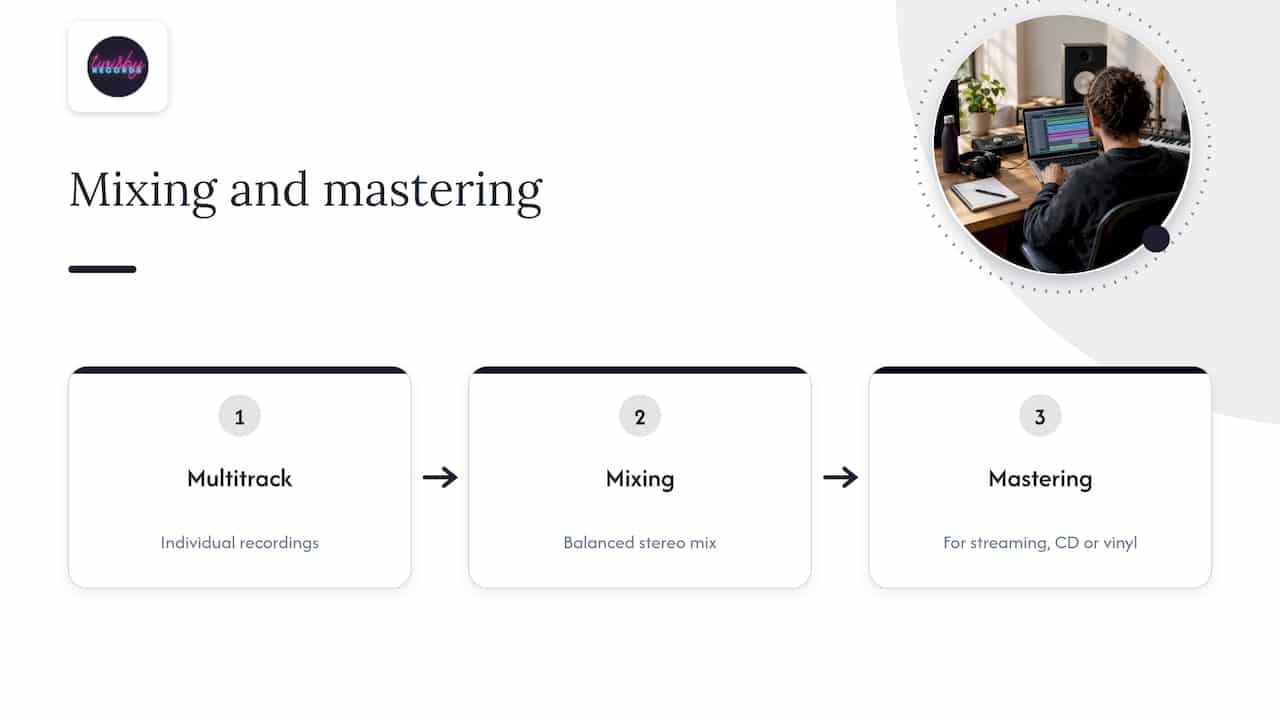
Mixing happens first and works on the individual tracks. Mastering is the final polish on the finished stereo file, preparing it for streaming, CD or vinyl. Many artists need both, and some engineers offer both so the two stages talk to each other. If you are planning physical formats, read how mastering for CD and mastering for vinyl change the requirements.
Step 1: Get clear on what you need
Before you contact anyone, answer these questions. They shape every quote you get.
- How many songs? A single, an EP or an album each call for different pricing and scheduling.
- How many tracks per song? A sparse acoustic song and a 70-track production are not the same job.
- What is the sonic target? Pick two or three finished records you want your song to sit next to.
- What is your deadline? A release date tied to a campaign or a distributor deadline changes who you can hire.
- What is your budget ceiling per song? Know it before you ask for quotes.
Write these down in a short brief. Engineers respond faster and quote more accurately when you give them real information.
Step 2: Find candidates
There is no single directory of good mixers, so use several routes.
Start with the records you love
The most reliable method is also the simplest. Look up the credits on the records that sound the way you want yours to sound. Engineer Chris Lord-Alge suggests that artists consider records they like, ask the producer’s advice, and compare mixes in a blind test when choosing a mixer. Streaming service credit panels and album liner notes usually name the mixer.
Be realistic, though. The mixer of a major-label hit may be out of range. Look at the mixers of smaller records in the same genre. Many of them work with independent artists and charge accordingly.
Use professional directories
The Audio Engineering Society offers an opt-in member directory you can search by city, state, country, audio field and job duty, including mixer and mastering engineer. It will not list everyone, since members opt in, but it is a good way to find working professionals near you.
Ask other artists
Ask bands in your scene who mixed their last release and how the process went. You will hear about communication and reliability, which no portfolio shows. Ask what they would do differently.
Look at small, personal studios
Studios that work directly with independent artists tend to be flexible on scope and quick to respond. That is the kind of service we run: personalized, hands-on, and built around DIY and independent artists rather than a one-size-fits-all pipeline.
Step 3: Assess experience and fit
This is the step most artists rush, and it matters most. You are judging two things: can this person do professional work, and can they do it for your music?
Listen to finished work, not just a reel
Open three or four songs they mixed and listen on the same headphones and speakers you know well. Ask yourself:
- Does the vocal sit where it should, clear but not detached from the band?
- Is the low end clean on small speakers and in a car?
- Does the song hold energy from the first verse to the last chorus?
- Does it sit comfortably next to commercially released records in the same genre?
Then check the genre match. An engineer who excels at heavy rock may not be the right pick for a quiet singer-songwriter record, and the reverse is also true. Look for work that is close to what you make.
Check credits you can verify
Credits listed on streaming services, liner notes or release pages are easy to confirm. Be cautious of long client lists with no releases attached. If someone claims work on a record, you should be able to find it.
Run a trial
Many engineers will mix a short section of one song, often a minute or so, either free or for a small fee. Send the same section to two finalists and compare the results blind, with the names hidden. Pick the one that serves the song, not the one that is simply louder. Louder usually sounds better at first and worse after ten minutes.
Judge the conversation
A good mixer asks questions: what are your references, what do you want listeners to feel, what bothers you about the rough mix? If they quote a price without asking anything about the music, expect a generic result. Our own approach is creative collaboration, so we start with your references and your goals, then work from there.
Step 4: Ask the right questions before you hire
Bring this checklist to every conversation.
Workflow
- How do you want the session delivered: stems, or the full multitrack session?
- Do you work in the box, or with outboard analog gear?
- Will you work from my rough mix as a reference?
Revisions
- How many revision rounds are included?
- What counts as a revision, and what counts as a new job?
- How should I send notes: written, or on a call?
Deliverables
- Which files do I get: full mix, instrumental, a cappella, TV mix?
- What format and sample rate? If you are unsure about sample rates, our guide to choosing a sample rate for recording covers it.
- Will you also master, or do I need a separate engineer?
Timing
- When can you start, and when will the first mix arrive?
- How long does a revision take?
- What happens if I miss the deadline for sending files?
An organized engineer answers all of these without fuss. Vague answers now become delays later.
What mixing costs in the United States
Prices vary widely. One industry source reports that most independent mix engineers charge $200 to $800 per song, and experienced names go well past $1,000. The same source notes that rates depend on project complexity and scope, including track count, recording condition, requested formats and extra work.
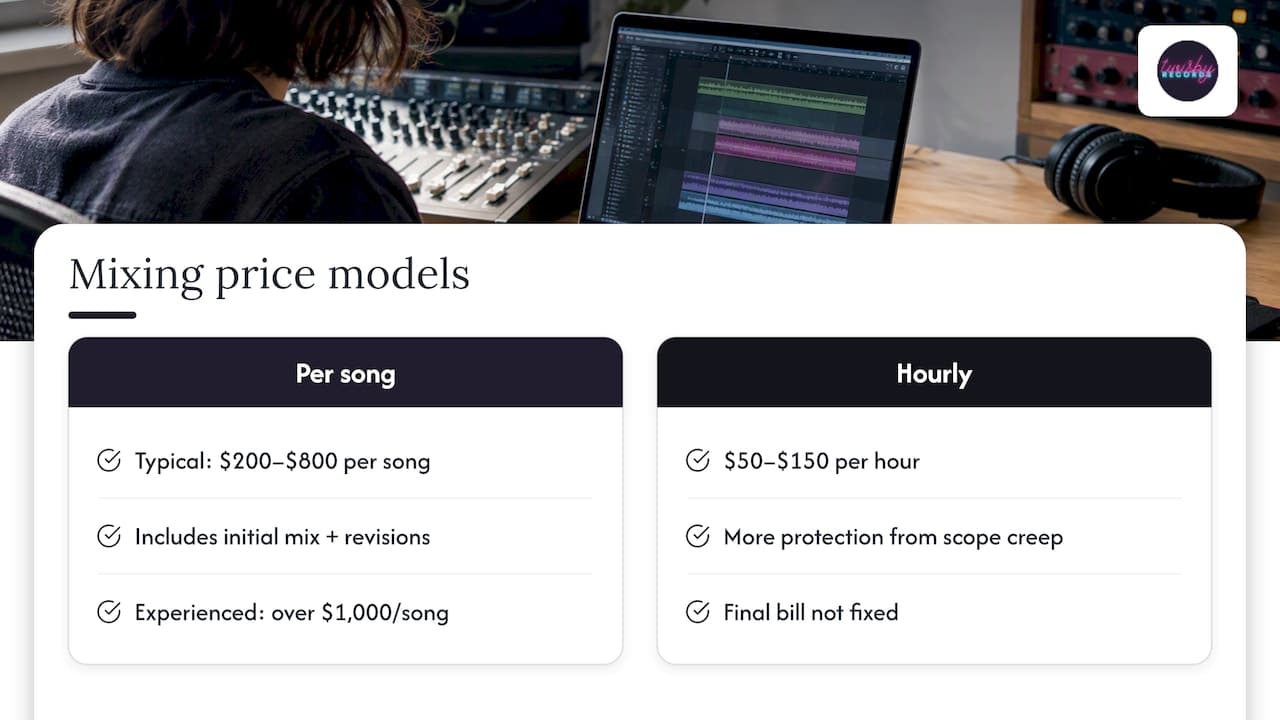
There are two common pricing models. Per-song pricing usually includes the initial mix and a set number of revision rounds. Hourly rates, which Tape Op reports ranging from $50 to $150, give more protection against scope creep but can make clients hesitant, because the final bill is not fixed.
What pushes the price up
- High track counts. More tracks mean more hours.
- Messy sessions. Unlabeled tracks, noise, timing problems and clipped files add cleanup time.
- Extra deliverables. Alternate mixes and stems usually cost more.
- Rush timelines. Faster delivery often carries a premium.
How to keep it down
Prep your session. Label every track, remove unused takes, export clean files at a consistent sample rate, and include a reference rough mix and notes. Our breakdown of mixing costs for DIY artists shows how preparation lowers what you pay per track.
Put it in writing
Before work begins, agree on the total cost, turnaround time, revision policy and files to be delivered. An email thread is enough for a small project, as long as both sides confirm it. A written agreement should specify:
- Scope: songs covered and expected track counts.
- Price and payment schedule: deposit, balance, and when each is due.
- Revisions: number included and the price for extra rounds.
- Delivery: dates for the first mix and for final files, and the file formats.
- Credit: how the mixer will be credited on the release.
- Ownership: you keep the rights to your music. The engineer is hired for a service.
One small tip from Tape Op: if the job is not under your personal name, use the band or project name in every communication. It keeps the paperwork consistent with how your release will appear.
Warning signs
Walk away, or at least slow down, when you see any of these.
- No finished, verifiable work in your genre.
- A price that is far below everyone else’s with promises of unlimited everything.
- Refusal to explain revisions or deliverables.
- Pressure to pay the full amount upfront with no written scope.
- Slow replies before you have paid. They rarely improve afterward.
Our perspective: what we see after 35 years
We have heard thousands of mixes come through from independent artists, and a pattern is clear. The artists who are happiest with their mixes are not the ones who spent the most. They are the ones who communicated well.
Here is what we believe:
- Reference tracks beat adjectives. Saying “warm but modern” means something different to every person. Sending two songs you love gives us something concrete.
- The mix serves the song. Technique matters, but it should never be the loudest thing on the record.
- Personal service beats off-the-shelf processing. We work with real analog gear and experienced engineers, not AI-driven presets, because each song needs its own decisions.
- Turnaround is part of quality. An artist waiting weeks on a mix loses momentum. Quick, clear communication keeps a release on schedule.
- Support continues after delivery. Mixing is one part of a release. The artists we work with often need mastering, formatting for streaming, and help reaching listeners afterward.
If you take one thing from this guide, make it this: hire the person you can talk to openly, whose work you have verified by ear.
— Kreg
Working with Twisby Records
If you are ready to talk about your project, we offer mixing and mastering built around independent artists. Mastering is $50 per song as a one-off, and you can see how it works on our mastering page. For mixing, we quote per project after hearing your material, so tell us about your songs on the mixing page.

Our mastering is Apple Digital Masters certified, which matters if you want your release to meet Apple’s standards. If you are curious about that process, read how to get Apple Digital Masters. We can also help once the record is finished: our advertising services run targeted Facebook and Instagram campaigns for music releases.
A simple hiring timeline
Here is a realistic way to run the process so nothing sneaks up on you.
- Four to six weeks before you need the final mix: write your brief and gather references.
- Shortly after: contact three engineers and share the brief.
- Next: compare replies, listen to credited work, and request a trial on a short section if offered.
- Then: pick your engineer and confirm scope, price, revisions and dates in writing.
- Send files: clean, labeled, with a rough mix and notes.
- Review the first mix: listen on several systems, take a day, then send consolidated notes in one message.
- Approve and move to mastering.
Sending all your notes at once, instead of trickling them in, saves revision rounds. If three people in your band have opinions, agree among yourselves first.
FAQ
How much should I pay for a mixing engineer?
For independent engineers, $200 to $800 per song is common, and well-known names charge more. Hourly rates are also used. The right figure depends on track count, how clean your session is and what formats you need. Always get the total in writing first.
Where can I find a mixing engineer?
Start with the credits of records you love, then ask local artists for referrals. You can also search the AES member directory by location and job type. Directly contacting small studios that work with independent artists is another good route.
Should I hire one person for mixing and mastering?
It can help. When one team handles both, they can adjust the mix based on how it will master, which saves back-and-forth. A separate mastering engineer gives a fresh set of ears. Either approach works if the communication is good.
What should I send a mixing engineer?
Send labeled, clean tracks at the same sample rate, a rough mix, two or three reference songs and brief notes on what you want. Include tempo and any parts you want emphasized. Better prep gives you a better mix and often a smaller bill.
Sources
- Mixing Engineer, Berklee
- Mixing Techniques for Audio, Routledge
- Find a Member, Audio Engineering Society
- Q&A with Chris Lord-Alge, Music Connection
- Working With a Mix Engineer, Tape Op #158
- Mix Engineer Pricing, Trackbloom