
Every song you release carries two copyrights, one for the composition and one for the recording. You own both when you write and record the song yourself. Know which is which before you send a mix to an engineer, upload to a distributor or put money behind an ad, because every one of those steps builds on who owns what.
This guide covers the U.S. rules an independent artist needs: what is protected, who owns it, how registration works, how the money flows and when you need permission. It is general information, not legal advice. For a dispute, a contract or a split you cannot settle, talk to a music attorney.
TL;DR
- A recorded song usually holds two separate copyrights: the musical work (melody and lyrics) and the sound recording (the specific recorded version).
- Protection starts automatically once the song is fixed in a recording or in notation. Registration is optional, but it matters when you need to enforce your rights.
- Collaborators share ownership by default unless a written agreement says otherwise, so put splits on paper before release.
- Samples, remixes and covers can require permission from one or both owners. There is no safe number of seconds you can use without asking.
- Settle ownership before you mix, master or advertise, so the release you pay for is one you fully control.
Table of Contents
- The two copyrights in every song
- When protection starts
- Who owns what when you work with others
- Registration: optional, but worth understanding
- How the money moves
- Using someone else’s music
- Clear your rights before you invest in the release
- Where mixing, mastering and ads fit in
- Perspective: why we start with rights
- Ready to release? Here is how we help
- FAQ
- Sources
The two copyrights in every song
The U.S. Copyright Office explains that a recorded song may create two protected works: a musical work and a sound recording.
- The musical work is the composition: the melody, harmony and lyrics. Think of what a songwriter could write down or play on a guitar.
- The sound recording is the series of sounds fixed in a medium, such as a WAV file or a streaming master. It is one specific performance, captured and produced.
The two are separate. The Office’s Circular 56A says a registration for a composition covers the music and lyrics but not a recorded performance, and a sound recording registration covers the recording but not the underlying song.
This matters for a practical reason. A cover of your song is a new sound recording of your composition. If someone samples your master, they touch both. And the rights differ in scope: the Office’s chart of rights shows that a sound recording’s public performance right is limited to digital audio transmissions, which is why AM/FM radio stations do not owe sound recording royalties, while a composition carries a full public performance right.
A quick example
You write a song on acoustic guitar and record a demo. The composition is one copyright. The demo is a sound recording. Later you hire a mix engineer and a mastering engineer to turn that demo into a release. You now have one composition and a polished recording of it. If you re-record it with a band next year, you have a second sound recording of the same composition. A song has one composition copyright and can have several recording copyrights.
When protection starts
You do not have to file anything for protection to begin. According to the Copyright Office, protection exists from the moment an original work is fixed in a tangible medium: for example when a song is recorded as an audio file or notated in sheet music or a digital file.
Ownership gives you exclusive rights, which the Office lists in its guide on how songwriters, composers and performers get paid:
- Reproduce the work (for example, press CDs).
- Prepare derivative works (for example, interpolations and remixes).
- Distribute copies.
- Publicly perform the work.
- Publicly display the work.
For sound recordings the performance right is narrower and there is no public display right, as noted above. Everything else on this page, from licensing to royalties, comes back to these five rights: you can grant them, sell them or keep them.
Who owns what when you work with others
If you write and record everything yourself, you own both copyrights. Things get more complicated the moment someone else contributes.
Co-writers
The Office’s registration guidance says the authors of a composition are normally the composer and lyricist. For a sound recording, the author is the performer whose performance is fixed, the record producer who captures and processes the sounds, or both. A copyright in the recording is not a substitute for a copyright in the underlying song.
A media and entertainment law firm explains that, without an agreement to the contrary, creative contributions such as a changed melody, a rewritten lyric line or an added solo can make a collaborator a co-author and joint owner. Its practical advice is either to record demos alone or to sign a written agreement that assigns all contributions to one party.
A split sheet
A split sheet is a one-page document listing every songwriter and each person’s percentage of the composition, signed by everyone. Fill it in the day the song is finished, while everyone still agrees. Keep songwriter names spelled the same way across every platform, because mismatched credits slow down royalty matching.
If you want a plain-language overview of how ownership works for creators generally, this explainer on IP ownership for creators is a good companion read.
Hired help: session players, producers, engineers
When you hire a session musician, a vocal producer or an engineer, ownership of what they contribute should be clear in writing. A producer can qualify as an author of the recording under the Office’s description above. Before you pay anyone to add to your track, ask for a short written statement of who owns what. Do this before the work starts, not after the song is on the charts.
A business structure can also keep this tidy. If you plan to release music regularly, our guide to setting up an LLC for music artists explains how a company can hold your catalog.
Registration: optional, but worth understanding
Copyright exists without registration. Registering gives you an official public record that you own the work and, in the U.S., it is what you need before you can bring an infringement suit over a U.S. work. The Office also says that to be due royalties for non-digital uses such as vinyl or CD pressing, you must be identified in the registration or public records.
Which application to use
The Copyright Office’s musicians guide says you need an application, a filing fee and a copy of the work. It offers:
- A Standard Application for an individual sound recording or musical work.
- A Group Registration of Unpublished Works for up to ten unpublished works by the same author.
- A Group Registration of Works on an Album of Music for up to twenty musical works or twenty sound recordings with a common author and the same claimant.
If you own both the composition and the recording, you can register them together on a Sound Recording application. If you are registering only the composition, use the Performing Arts application. Registration happens online through the Office’s eCO system, where you upload an audio file as the deposit and pay the fee.
What it costs and how long it takes
Fees change. A 2026 registration guide reported $45 for a Single application and $65 for a Standard application, with an average processing time of 4.1 months for cases closed between October 2025 and March 2026. Because the Office has proposed a new fee schedule, check the Copyright Office’s current fee page before you file.
One timing tip: register your song before you release it, or soon after. Your effective registration date is the day the Office has your complete application, deposit and fee, so filing early puts the date on your side.
How the money moves
Copyright is the right. Royalties are what you collect for using it. The Office’s income guide describes several separate streams, and an independent artist often has to set up each one on their own.
| Money stream | What it pays for | Who collects |
|---|---|---|
| Public performance of the composition | Streams, radio, venues, broadcasts | A performing rights organization (ASCAP, BMI, SESAC or GMR) |
| Mechanical royalties | Reproducing the composition, including interactive streaming | The Mechanical Licensing Collective for interactive streaming, since January 1, 2021 |
| Digital performance of the recording | Non-interactive services such as satellite and internet radio | SoundExchange |
| Sync and master licenses | Your song or recording in a video, film or ad | You, or your representative, by negotiated license |
All of this comes from the Copyright Office’s guide to how songwriters, composers and performers get paid. Independent creators often use an aggregator or distributor to deliver music to streaming services, and register their works with SoundExchange for digital recording royalties.
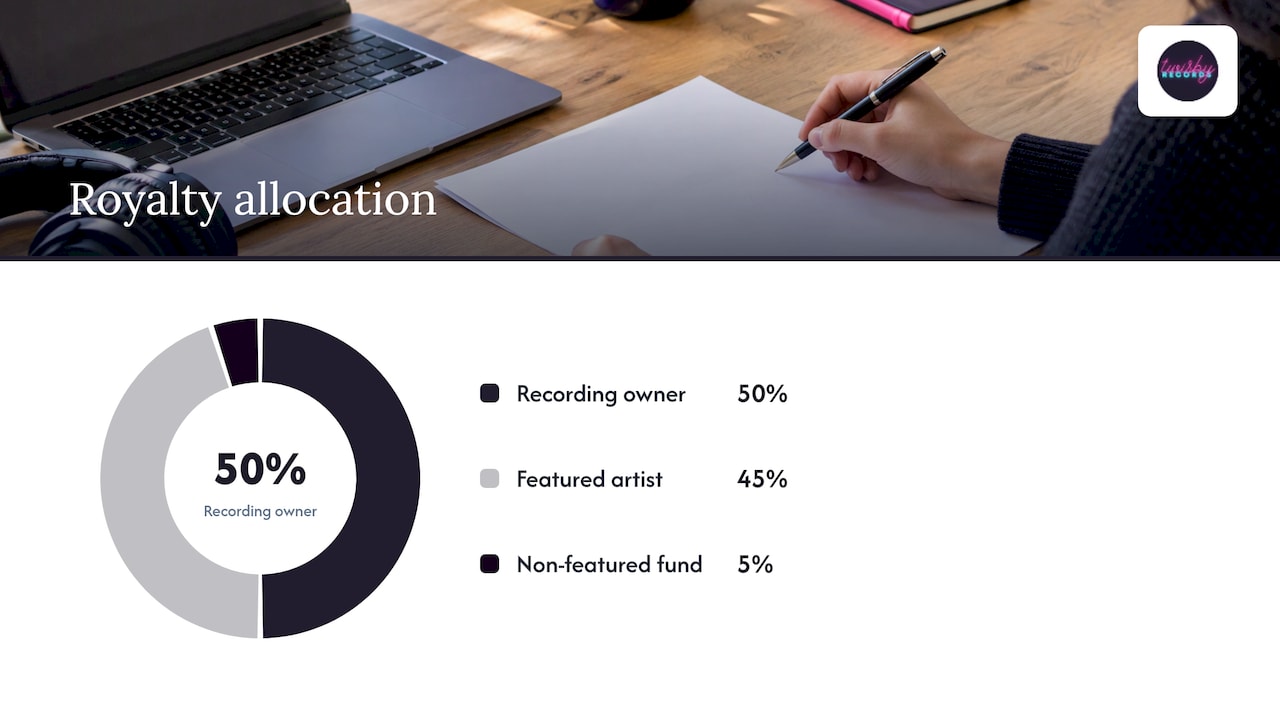
For non-interactive digital streaming, SoundExchange splits the money 50% to the recording’s copyright owner, 45% to the featured artist and 5% to a fund for non-featured musicians and vocalists. If you own your recordings and perform on them, you may be in line for more than one slice.
One more identifier is worth having before release: an ISRC, a code that identifies each recording so plays can be tracked. Our guide to ISRC codes for independent artists shows how to get and use one.
Using someone else’s music
This is where independent artists get into trouble, usually by accident.
The Copyright Office’s handout for musicians using preexisting music says you have three routes: use a work in the public domain, get permission from the copyright holder, or rely on a legal exception such as fair use or the section 115 license for musical works.
- Samples, remixes and mashups may require licenses from both the sound recording owner and the musical work owner.
- Interpolations, where you re-record a melody or lyric rather than lifting the audio, involve the musical work.
- Covers need a license, or an eligible section 115 mechanical license, which allows audio-only releases of a song once it has been released.
- Video covers may need different or additional licenses.
- Fair use is decided case by case. There is no fixed amount of a song you can use without asking, and the Office warns that trying and failing to reach the owner does not substitute for permission.
Beat stores and loop libraries have their own rules, set by the license you click through. Read what the license lets you do with the track, including whether you can monetize and distribute it.
Clear your rights before you invest in the release
Mixing, mastering and advertising all spend money on the assumption that the music is yours to release. A clean ownership picture protects that spend.
A short pre-release checklist:
- Confirm every songwriter and record the splits in a signed split sheet.
- Confirm who owns each recording, including any producer or session contribution.
- Clear every sample, loop and interpolated line in writing.
- Decide whether to register the song and the recording before release.
- Make sure your distributor and royalty accounts list the right names and ISRCs.
- Only then send final files to be mixed and mastered, and point ad money at the release.
This order keeps you from paying twice: once for a polished master, then again to pull it down or re-record around an uncleared sample. If you want a wider look at the legal side of the business, our post on copyright, royalties and music’s legal secrets goes deeper.
Where mixing, mastering and ads fit in
Your mix and master are new sound recording work built on your composition. That is why we treat ownership as step zero on every project: the audio we shape should be audio you have the right to release.
Once the rights are clean, the quality of the recording is what listeners hear first. Our mixing and mastering work is personalized and done by experienced engineers, and our masters carry Apple Digital Masters certification. If you are planning your release budget, our guide to music ad budgets for independent artists explains what to spend.
Perspective: why we start with rights
We have spent more than 35 years around independent music, and the pattern is familiar. An artist saves for a great mix, a polished master and a release campaign, and then finds out a co-writer never signed off or a sample was never cleared. The money was well spent on the sound and badly spent on the foundation.
That is why we ask about ownership early and why we do not treat mixing, mastering and advertising as separate worlds. A track that sounds finished and is legally clean is the one worth promoting. Our work is personalized because every artist’s situation is different: a solo writer, a duo, a band with a producer. Each needs its own answer, not an off-the-shelf one.
Your name and your catalog are the first layer of armor. Get the paperwork right once, and every release after it gets easier.
Kreg
Ready to release? Here is how we help
Once your rights are in order, we can take the audio side off your plate. Mastering is $50 per track, and Apple Digital Masters certification is part of our work. For mixing and recording, request a quote and we will tailor it to your project.
If you want to reach listeners with the release, our advertising packages run targeted Facebook and Instagram campaigns for music releases. Standard Packages are $25 per month plus a 20% fee on ad spend, and there is a one-time onboarding fee of $99. Ad campaigns work best when you own what you are promoting, which is one more reason to finish the rights checklist first.
FAQ
Do I need to register my song to own the copyright?
No. Copyright exists the moment your original song is fixed in a recording or in notation. Registration is optional, but it creates a public record of ownership and is needed before you can sue over infringement of a U.S. work.
Is a song’s composition copyright the same as the master?
No. The composition covers the melody and lyrics, and the sound recording covers a specific recorded version. They can be owned by different people and are registered, licensed and paid separately.
Can I post a cover song if I credit the original artist?
Crediting is not permission. A cover needs a license, and audio-only releases may qualify for a section 115 mechanical license. Video covers can require additional licenses, so check the rules for the platform and format you plan to use.
How much of someone else’s song can I use for free?
There is no safe minimum. The Copyright Office states there is no hard-and-fast amount of music you can use without permission, and fair use is judged case by case. When in doubt, get a written license.
Who collects my streaming royalties?
Several organizations, each for a different stream. Performing rights organizations collect composition performance royalties, the Mechanical Licensing Collective handles interactive streaming mechanicals, and SoundExchange collects digital performance royalties for recordings.
Sources
- What Musicians Should Know about Copyright, U.S. Copyright Office
- Circular 56A, Copyright Registration of Musical Compositions and Sound Recordings
- Musical Works, Sound Recordings, U.S. Copyright Office
- How Songwriters, Composers, and Performers Get Paid, U.S. Copyright Office
- Musical Compositions and Sound Recordings, U.S. Copyright Office
- Sampling, Interpolations, Beat Stores and More, U.S. Copyright Office
- The Consequences of Collaboration, Aspect Law Group
- How to Register a Song: Copyright Office and PROs
- Content Creator IP Ownership Explained for 2026