


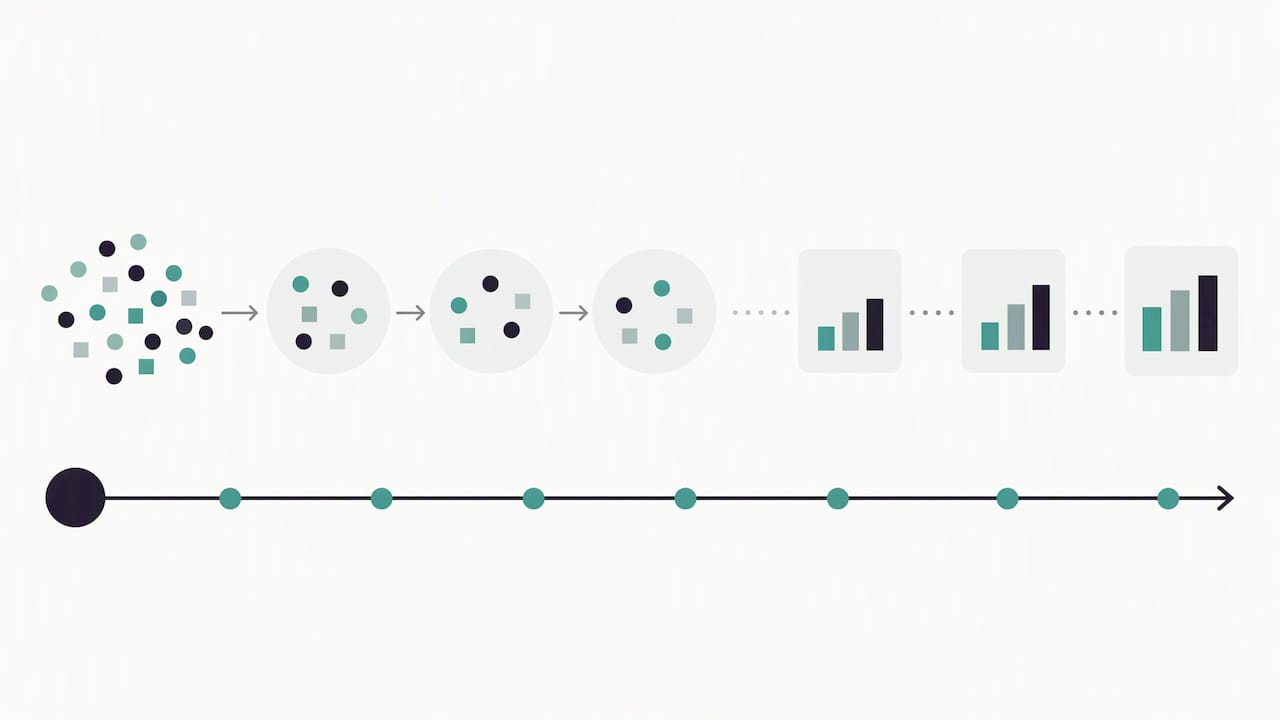
Spotify’s popularity score is a relative number that indicates how a track or artist is performing compared to others on the platform. It emphasizes recent plays more than lifetime totals and does not update instantly. Treat it as a delayed momentum signal you check periodically, never as a real-time dashboard for a release.
TL;DR:
- Spotify scores tracks individually, while artist popularity aggregates track scores; duplicate releases receive separate ratings, and the value may lag listening by days.
- Spotify does not publish its formula, update schedule, or a playlist threshold, so treat precise claims about guaranteed placement as speculation.
- For quick checks, use the API console or a third party checker; scheduled calls can track weekly, but scripts should verify field availability each run.
- Judge campaign results with Spotify for Artists and ad conversion reports; popularity may lag, so concentrate promotion around launch windows and verify lift with conversions.
Table of Contents
- How Spotify Defines and Calculates Popularity
- How to Check Your Track or Artist Score
- What Popularity Actually Affects, and What It Doesn’t
- How to Act on Your Popularity Score as a Musician
- Metrics Support the Music, They Don’t Replace It
- Where Twisby Records Fits Into Your Streaming Growth
- FAQ
- Sources
How Spotify Defines and Calculates Popularity
We rely on Spotify’s own developer documentation to understand this metric, and that documentation is intentionally sparse. According to the Web API reference, popularity is “based, in the most part, on the total number of plays the track has had and how recent those plays are.” That phrasing matters: Spotify never commits to an exact formula, a weighting scheme, or a decay curve. What we get is a direction, not a recipe.
A few structural facts are worth holding onto:
- Track popularity is scored individually, so duplicate uploads (a single, an album cut, a remaster) are each rated on their own.
- Artist popularity is derived mathematically from the popularity of that artist’s tracks, not measured independently.
- Spotify states the popularity value can lag actual listening activity by a few days, so a big release week may not show up immediately.
One documented limitation stands out: Spotify never discloses the exact update cadence or formula weights behind the popularity score, which means any specific percentage or threshold you see floating around the internet is a guess dressed up as fact.
Community discussion backs this up. A developer forum thread on the topic shows practitioners trying to reverse-engineer finer details, like geographic weighting or logarithmic scaling, from observed score behavior. Some of those theories are reasonable. None of them are confirmed by Spotify. When you read a claim about how the score “really” works, separate what Spotify has published from what someone inferred by watching numbers move.
How to Check Your Track or Artist Score
Checking the number is simple once you know where it lives. We walk through the main options below, from quickest to most reliable for repeated tracking.
- Use the Spotify Web API developer console for a one-off check: look up a track or artist endpoint, authenticate, and read the
popularityfield directly in the response. - Pull the artist endpoint when you want the artist-level number, since it reflects an aggregate drawn from that artist’s catalog rather than a single song.
- Call the tracks endpoint for song-specific scores, and batch several tracks in one request if you are comparing a catalog.
- Set up authenticated, scheduled API calls if you want to track changes weekly rather than checking manually, which matters because the field can shift without a visible trigger.
- Try a third-party popularity checker for a fast, no-code look. These small tools query the public API behind a simple search box, and they are useful for a quick gut check before you commit to building anything yourself.
Whichever method you pick, remember the API surface itself is not fixed. Spotify’s February 2026 changelog documents fields related to popularity being modified or removed entirely, which is a reminder that any script or tool you build should check field availability each time it runs rather than assuming last month’s structure still holds.
What Popularity Actually Affects, and What It Doesn’t
Here is where a lot of confusion sets in. Spotify has never stated that crossing a specific popularity threshold guarantees placement on an editorial playlist or triggers a payout change. The score is a relative snapshot of momentum, and it likely feeds into how the platform’s recommendation systems weigh a track among other signals, but Spotify does not publish a direct cause-and-effect chain from score to outcome.
What we do know, based on the documented emphasis on recency:
- Popularity correlates with recent listening activity more than lifetime stream count.
- Engagement signals like saves, skips, and playlist adds are generally relevant to how recommendation systems evaluate a track, even though Spotify does not publish exact weighting.
- A sudden spike in plays from a release push may not show up in the score right away, because the value can lag real activity by a few days.
Pro Tip: Don’t wait on popularity score to judge a campaign’s success. Check your Spotify for Artists dashboard and ad platform reporting first, since those update faster and reflect what listeners actually did.
Because the score moves on a delay and without a published formula, it works best as a background indicator you glance at periodically, not a control panel you watch in real time during a launch, much like the principles in the Gym Playlist Management: The Multi-Room Control Playbook where control is unified but not real-time instant.
How to Act on Your Popularity Score as a Musician
Once you accept that popularity is directional rather than precise, the question becomes what to actually do with it. We treat it as one input among several, never the single metric that defines a release’s success.
A few habits make it useful instead of misleading:
- Check popularity alongside Spotify for Artists data and ad conversion reports rather than in isolation.
- Concentrate listening activity into short windows around a release, since the documented emphasis on recency means a pitching window, pre-save push, or targeted ad burst is more likely to move the score than the same streams spread over months.
- Pair promotion with pre-save campaigns and launch-window tactics designed to stack activity into the days that matter most.
- Verify any lift with ad conversion tracking instead of waiting for the popularity number to catch up.
Pro Tip: A mix or master with stronger dynamics and clarity won’t move the popularity score by itself, but it does affect whether listeners finish a track, save it, or skip it, and those behaviors are what feed the systems the score is built on.
For broader tactics on building streams over time, our guide on increasing Spotify streams as an indie artist covers the campaign side in more depth.
Metrics Support the Music, They Don’t Replace It
We’ve watched artists chase a popularity number the same way they’d chase a follower count, and it rarely ends well. The score is a useful compass for timing and momentum, but it says nothing about whether the song is actually good, whether the mix translates on earbuds, or whether a fan base is forming. Numbers tell you where attention is moving. They don’t tell you why, and they don’t replace the judgment that goes into writing, recording, and promoting a release with intention. Use the score to confirm what you already suspect from your own analytics, not to define your next creative decision.
— Kreg
Where Twisby Records Fits Into Your Streaming Growth
We work on the two factors that actually move the needle before popularity ever shows up: how the track sounds and who hears it. Our mastering service sharpens the final product so a release holds up across playlists and devices, and our managed advertising packages put tracks in front of listeners likely to save and replay them, which is the behavior that drives recency-weighted momentum in the first place.

Here’s what that looks like in practice:
- Mastering handled with real analog gear and Apple Digital Masters certification.
- Standard Packages for advertising, built for artists who want a managed campaign without building one from scratch.
- Mixing services priced per project, with quotes available once we know your track.
If you’re ready to see what a polished master and a targeted campaign can do for your next release, start with a mix quote or browse our full services lineup.
FAQ
What is a good Spotify popularity score for an artist?
There is no published threshold that defines “good,” since Spotify only states that the score is relative and based on recent plays compared to the rest of the platform. A rising number over time tells you more than any single snapshot.
How often does Spotify update the popularity score?
Spotify’s documentation states the value can lag actual listening activity by a few days rather than updating instantly. That delay means a recent release or promotional push may not be reflected right away.
Can I check my Spotify popularity score for free?
Yes, the Spotify Web API is publicly documented and free to query for developers, and several third-party tools use that same API to show scores through a simple search interface. Both approaches pull from the same underlying data.
Does a higher popularity score get my song on playlists?
Spotify has not stated that a specific popularity threshold guarantees editorial playlist placement. Engagement signals like saves and playlist adds are generally relevant to recommendation systems, but popularity itself is better understood as a momentum indicator than a playlist key.
Why did my Spotify popularity score drop suddenly?
Because the metric weighs recent plays heavily, a drop often reflects a natural dip in recent streaming activity rather than a penalty. The Web API changelog from February 2026 also shows that popularity-related fields can be modified or removed, which is a reminder to check current documentation rather than assume the metric works exactly as it did months earlier.
Sources
- Web API Reference | Spotify for Developers
- Web API Changelog – February 2026 | Spotify for Developers
- Question about the popularity-score of an artist – Spotify Community