

Start by turning your track’s Song DNA into a single testable audience hypothesis, then validate it with real data before you spend a dollar on ads. For most independent releases, that means listeners who already stream artists one or two tiers above you in the same lane. Twisby Records has watched this pattern play out across decades of mixing and advertising work with DIY musicians.
TL;DR:
- Target audiences can be identified by mapping your Song DNA to existing fan bases of similar artists and confirming overlap with early streaming data.
- Focusing on retention, engagement, repeat listens, and conversions provides more accurate signals of audience fit than raw stream counts or vanity metrics.
- Giving your audience hypothesis three to six months to gather reliable data helps refine targeting, especially when adjusting for high retention or expanding reach.
- Running small, low-cost tests like Instagram ads and geotargeted premieres can validate personas without requiring large budgets.
- Partnering with experienced campaigns, such as those offered by Twisby Records, can effectively scale early signals into more consistent streams and sales.
Table of Contents
- How Do You Find Your Target Audience for Music?
- What Is Song DNA and How Do You Turn It Into a Hypothesis?
- Mining Streaming Data, Social Analytics, and Email Lists for Early Signals
- How Do You Research Adjacent Artists and Music Subcultures?
- Building Personas and Testing Them Without a Big Budget
- What Metrics Prove You’ve Found the Right Audience?
- What Twisby Records Has Learned From Decades of Audience Work
- A Realistic Timeline for Audience Testing
- Ready to Turn Audience Data Into a Real Campaign?
- Where to Learn More About Music Audience Research
- Sources
- FAQ
How Do You Find Your Target Audience for Music?
You don’t need a marketing degree to figure out who your music is for. You need an afternoon, a spreadsheet, and a willingness to test a guess instead of trusting your gut alone. Here’s the six-step version:
- Define your Song DNA. Write one sentence describing mood, tempo, and lyrical theme.
- Turn it into a hypothesis. Name who listens, where, and why.
- Pull existing data. Check streaming stats, social analytics, email signups, and gig attendance.
- Map three adjacent artists. Find playlists and subcultures already built around that sound.
- Build one or two personas. Keep them specific, not aspirational.
- Run one low-cost test. A small ad campaign or targeted release beats a hundred hours of speculation.
Each step feeds the next. Skip the hypothesis and your data has nothing to confirm or deny. Skip the test and your persona stays a guess dressed up in a spreadsheet.
What Is Song DNA and How Do You Turn It Into a Hypothesis?
Song DNA is the combination of mood, energy, tempo, lyrical themes, and production choices that define a track’s emotional fingerprint. A moody, mid-tempo indie song with reverb-heavy vocals signals something different than a stripped-back acoustic ballad, even if both come from the same songwriter.
Map that fingerprint to listening context. A high-energy track fits workout playlists and road trips. A slow-burn ballad fits focus sessions or late-night wind-down listening. Once you know the context, write a one to two sentence hypothesis: “This song appeals to 20- to 29-year-olds who discover new artists through curated indie playlists, and they’ll listen while commuting or studying.” That sentence becomes your test criteria for everything that follows.
Mining Streaming Data, Social Analytics, and Email Lists for Early Signals
Before a release, you don’t have your own listener base yet. The practical workaround is mapping your Song DNA to audiences that already exist around comparable artists, then confirming the overlap with your own early numbers once they arrive.
Once you have any streams at all, these numbers tell you more than raw play counts ever will:
- Listener location breakdowns, which reveal geographic clusters worth targeting with ads
- Save rates and playlist adds, both stronger fit signals than plays alone
- Completion rate, showing whether people who click actually stay
- Top-performing social posts and which demographic segments engage most
- Engagement rate by content type (Reels vs. static posts vs. Stories)
Pro Tip: Don’t wait for big numbers before you look. A sample of 200 listeners can already show a location or age skew worth acting on, especially when cross-checked against your social analytics.
Younger demographics currently show strong subscription streaming engagement, and much of their discovery now happens through short-form video rather than search, according to IFPI’s Engaging with Music research. If your early streaming data skews younger, your social strategy should follow that lead, not fight it.
How Do You Research Adjacent Artists and Music Subcultures?
Pick three artists one tier above and one tier below your own following. Superstar acts have audiences too broad and diffuse to learn from. Artists closer to your scale have followings shaped by the same niche forces shaping yours, which makes their listener base a far more useful benchmark, an approach Hypebot’s audience research guide recommends for exactly this reason.
From there, run a few concrete searches:
- Search those artist names in playlist search tools to see which curated playlists include them
- Check short-form video platforms for trending sounds or hashtags tied to their fan communities
- Look at niche hashtags around the subculture, not just the genre tag
- Read comment sections on their most popular posts for language patterns and demographic clues
Genre lines matter less than they used to. IFPI’s 2022 report found fans engage across more genres than industry assumptions suggest, so don’t rule out adjacent artists just because they sit in a different genre tag on Spotify.
Building Personas and Testing Them Without a Big Budget
A persona only earns its place if it survives contact with real spending. Build it, then spend a small amount of money trying to prove it wrong.
Fill in these fields for each persona: age range, location, favorite comparable artists, listening occasions, primary platform, and likely playlists. Keep it to one paragraph. A persona that takes a full page to describe is really three personas pretending to be one.
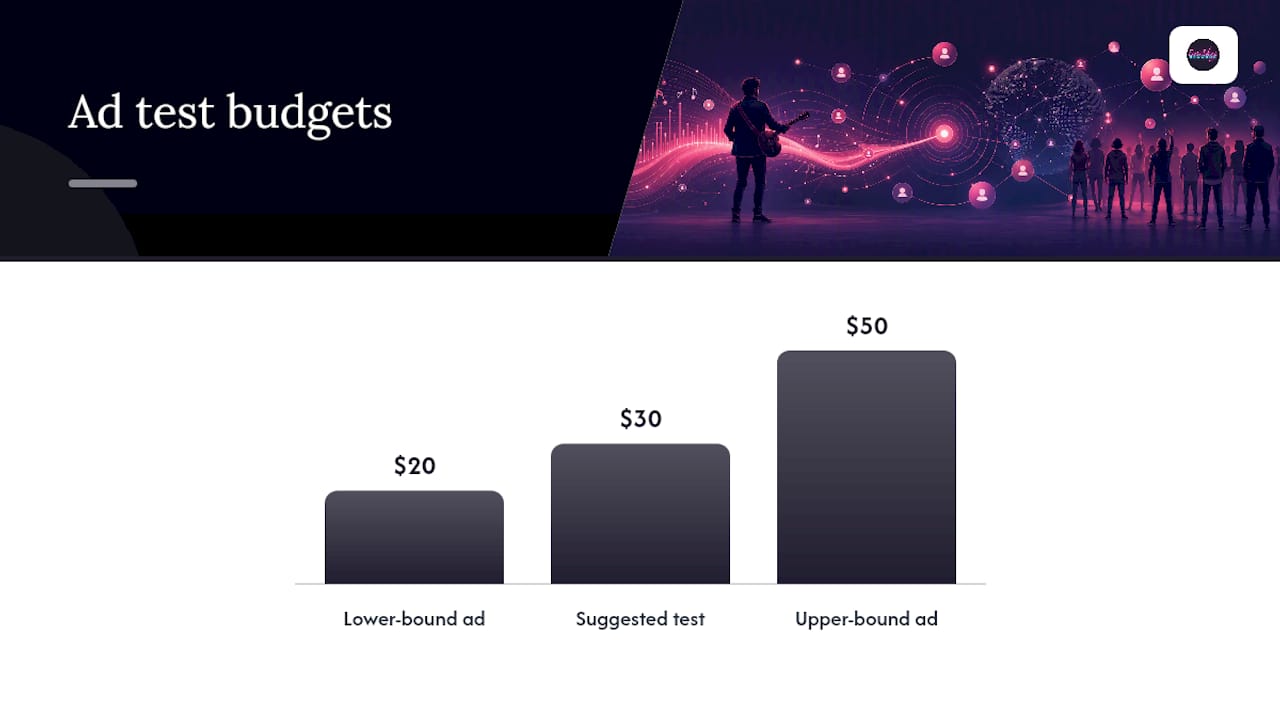
- Run a split test. Two or three small Instagram ad variations targeting different age bands or interests, $20 to $50 each, over five to seven days.
- Try a geotargeted premiere. Release early or exclusively in one city or region where your data shows concentration.
- Pitch playlists directly. Independent curators in your genre lane often respond faster than algorithmic ones.
Spotify’s own audience segmentation guidance breaks targeting into demographics, behaviors, and listening context, which maps neatly onto the persona fields above. Success at this stage isn’t virality. It’s a lower cost-per-click on one variation and a completion rate that beats your baseline.
What Metrics Prove You’ve Found the Right Audience?
Vanity metrics lie. A stream is a data point, not proof of fit. Repeat plays, saves, and returning listeners tell a truer story about whether you’ve found the right group.
Track these signals to decide whether to keep, adjust, or scrap a hypothesis:
- Retention: do listeners come back for a second or third play within a week?
- Engagement: saves, follows, and playlist adds outweigh raw stream counts
- Email signups from listeners, which signal intent beyond passive listening
- Conversion from casual listener to paying fan, whether that’s a ticket, a merch purchase, or a Bandcamp sale
A useful benchmark from Hypebot’s data-driven fit analysis: retention and repeat engagement matter more than total volume when judging whether a persona actually fits. A thousand one-time streams from the wrong crowd tells you less than fifty repeat listeners from the right one.
What Twisby Records Has Learned From Decades of Audience Work
Small-sample signals only become useful when someone knows how to scale them without wasting a budget. Twisby Records has built mixes and masters for DIY artists for more than 35 years, holds Apple Digital Masters certification, and runs targeted Facebook and Instagram campaigns built around exactly this kind of audience testing.
The pattern holds across genres: a clear Song DNA hypothesis, a small early data set, and a managed test that turns guesswork into a campaign built for the audience that actually shows up. Artists who want that layer of support beyond DIY testing can explore Twisby Records’ advertising services for a next step.
A Realistic Timeline for Audience Testing
Give a hypothesis three to six months before you judge it. That covers a release cycle, a few rounds of ad testing, and enough listener data to see real patterns instead of noise.
Watch for two signals. If retention climbs but reach stays flat, narrow your targeting further. If reach grows but retention drops, you’ve likely gone too broad. Either way, treat the hypothesis as a draft, not a verdict. The artists who make progress are the ones willing to run five small tests instead of one big bet.
— Kreg
Ready to Turn Audience Data Into a Real Campaign?
Testing a hypothesis with a $30 ad spend gets you signal. Turning that signal into consistent streams and sales usually takes more time and platform know-how than most independent artists have to spare between writing, recording, and everything else on their plate. That’s where a managed partner earns its keep.
Twisby Records builds targeted Facebook and Instagram campaigns specifically for music releases, backed by audience research, custom landing pages, and reporting that tells you whether a persona is actually converting, not just clicking. It’s the difference between guessing at ad spend and having someone who has run these tests across hundreds of releases interpret the results for you. If you’ve already found early signals through the checklist above and want help scaling them into a real campaign, check out Twisby Records’ advertising services or browse the full service lineup to see where mixing, mastering, and ad management fit into your release plan.
Where to Learn More About Music Audience Research
For deeper data on listening habits and discovery trends, IFPI’s Engaging with Music reports remain the most comprehensive global surveys available, covering tens of thousands of fans across more than 20 countries. Berklee’s marketing strategy guidance offers practical tactics built specifically for independent artists. For platform-level snapshots and ongoing industry commentary, Hypebot and RIAA consumer research both track shifting listener behavior worth revisiting each release cycle.
Sources
- IFPI — Engaging with Music (2021)
- Berklee — Music marketing strategies for independent artists
- Hypebot — How to find your fans: use music data to find market fit
- Spotify Ads — Types of target audience
FAQ
What Demographic Listens to Music the Most?
Younger listeners, particularly those in their teens and twenties, show the highest engagement with subscription streaming and the fastest adoption of new discovery channels like short-form video, according to IFPI research.
What Are the Four Types of Target Audiences?
Marketing generally groups audiences by demographics (age, location, gender), behaviors (listening habits, purchase patterns), interests (genre, artist affinity), and context (when and where someone listens), a breakdown Spotify’s ad platform uses for audio targeting.
What Is Gen Z’s Favorite Music Genre?
There’s no single dominant genre for Gen Z. IFPI’s research shows this generation engages across a wider spread of genres than older listeners, discovering new sounds through short-form video and playlist culture rather than sticking to one lane.
Who Is the Main Audience of Spotify?
Spotify’s user base skews toward younger adults who stream actively across multiple genres, though the platform’s own audience tools let advertisers and artists target far more specific segments by age, behavior, and listening context than a single “main audience” label suggests.