
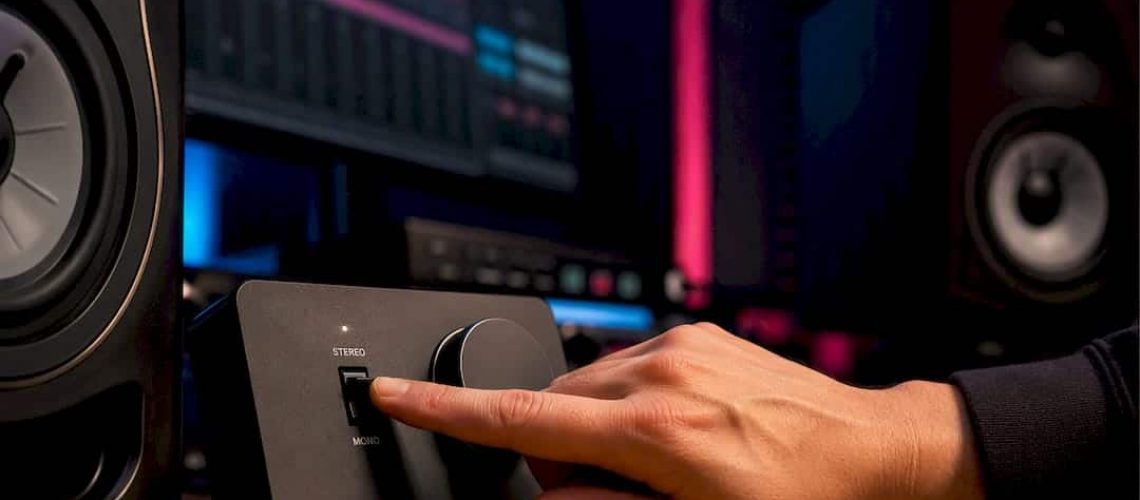

Check mono early and often: build your mix’s core balance in mono, lock the low end to center, use a correlation meter to catch trouble, and fix phase with polarity or timing tweaks before adding width. That single routine, backed by tools like a correlation meter and the workflow we use at Twisby Records, catches most mono compatibility mixing problems in minutes instead of after release day.
TL;DR:
- Building your mix in mono helps identify phase and polarity issues early, preventing elements like vocals and bass from disappearing when summed to mono.
- Frequency masking and pan law can cause significant tonal shifts and level loss in mono, especially when stereo effects and wide panning are used without checks.
- Regularly checking mono compatibility during the mix process, especially after stereo effects are added, ensures the track remains balanced and punchy across all playback systems.
- Low frequencies below 150 Hz should stay mono to retain punch and avoid phase cancellations, with mid/side EQ used for precise control.
- Simple fixes like polarity flips and narrowing stereo width often resolve many common mono compatibility problems, reducing the need for extensive re-recording or editing.
Table of Contents
- What Mono Compatibility Mixing Actually Protects
- Why Mixes Collapse: Phase, Comb Filtering, and Pan Law
- How to Check Mono Compatibility Fast
- The Build-in-Mono Workflow That Actually Works
- Keeping Bass and Sub Frequencies Rock Solid
- Triage: Fixing Phase Problems Fast
- Why This Workflow Comes From Real Studio Experience
- A Studio Take on Width Versus Translation
- Get a Mix That Holds Up Everywhere It Plays
- Sources
- FAQ
What Mono Compatibility Mixing Actually Protects
Mono compatibility means your stereo mix holds its balance, tone, and level when the left and right channels get summed into one signal. That summing follows a simple formula: mono = (left + right) / 2. It happens constantly, whether you plan for it or not.
Phones on speakerphone, smart speakers, most club PA systems, and a chunk of broadcast and podcast platforms all collapse stereo to mono at some point in the signal path. If your mix depends on wide stereo tricks to sound full, that phantom center image built from correlated left and right content can thin out or vanish entirely.
Common failure modes when a mix hits mono badly:
- Vocals or snares drop in level or disappear
- Guitars or synths sound thin or hollow
- The whole track loses punch and low-end weight
- Tonal balance shifts, sometimes drastically
Mono mixing techniques exist specifically to prevent these surprises before a listener ever notices.
Why Mixes Collapse: Phase, Comb Filtering, and Pan Law
Phase cancellation is the main culprit. When two similar waveforms arrive slightly out of time or with inverted polarity, they cancel each other out instead of adding together. Comb filtering is the audible result: certain frequencies vanish while others get boosted, creating that swirly, hollowed-out sound.
Picture two identical claps, one delayed by a few milliseconds. Summed to mono, some frequencies double and others erase completely. Stereo doubling, wide reverbs, and aggressive stereo wideners create this exact scenario constantly.
Frequency masking makes it worse. Stereo separation often hides overlapping instruments by placing them in different spots in the stereo field. Remove that spatial separation, and previously distinct elements suddenly fight for the same sonic space.
Pan law adds a final wrinkle. A signal panned hard left or right can lose about 6 dB when summed to mono compared to a centered signal, which throws off the balance you spent hours dialing in.
- Comb filtering: frequency-specific cancellation from timing offsets
- Masking: elements that hid behind stereo width now compete directly
- Pan law: hard-panned parts lose level after summing, centered parts don’t
How to Check Mono Compatibility Fast
You need two things in your signal chain: a way to sum to mono, and a way to measure how risky your stereo content actually is.
- Sum to mono using a hardware monitor controller’s mono button, or a utility plugin placed on the master bus, ideally after your mix bus processing so you’re hearing the true final signal.
- Read a correlation meter placed on the same bus. A reading near +1 means the channels are nearly identical and mono-safe. A reading near 0 means wide, interesting stereo content that carries real cancellation risk. Anything dipping negative signals out-of-phase content that will cancel hard in mono.
- Check at three points: during early balance work, right after adding any stereo widener or delay-based effect, and again before you bounce anything final.
Placement matters more than most producers realize. A mono check before your bus compressor tells you nothing about what actually ships.
Pro Tip: Keep your monitoring level consistent between mono and stereo checks. A quiet mono check will always sound worse than it is, and you’ll chase problems that don’t exist.
The Build-in-Mono Workflow That Actually Works
This is the practical workflow that experienced mix engineers rely on: build the core in mono, open up to stereo, then check mono again before anything ships.
- Start in mono. Set levels and carve EQ separation between competing elements without panning to hide problems.
- Add compression and dynamic control while still in mono, so you’re shaping the real relationships between tracks.
- Open to stereo. Pan instruments, add reverb and stereo effects, but keep early moves conservative.
- Re-check mono after every stereo decision and again right before any deliverable leaves your session.
Why bother with the mono-first step at all? Building separation through level and frequency instead of panning position means:
- Your mix has real definition even without stereo width
- Panning becomes an enhancement instead of a crutch
- Mono translation stops being a guessing game
Producers who skip straight to stereo often discover masking issues only after the mix already feels “done,” which is the worst time to find them.
Keeping Bass and Sub Frequencies Rock Solid
Low frequencies are far less directional to the human ear than high ones, which is exactly why everything below roughly 100 to 150 Hz should stay mono. Wide bass and sub content is one of the fastest ways to lose punch when a mix hits a mono system.
Mid/side EQ is the standard fix. High-pass the side channel around 150 to 200 Hz, which keeps your kick and bass centered and solid while letting frequencies above that band retain their stereo width. Some producers route sub content to a dedicated mono bus instead, which achieves the same result with less surgical EQ work.
Quick checks worth running every session:
- Solo your low end in mono; the kick and bass should hit just as hard as in stereo
- Confirm no wide stereo effects (chorus, wideners) touch anything below your cutoff
- Keep the cutoff conservative; when in doubt, mono a little higher rather than lower
Pro Tip: If your sub bass uses a synth with a built-in stereo unison or detune setting, check whether it’s adding width you don’t actually need down there.
Triage: Fixing Phase Problems Fast
Start with the cheapest fix and work up. A polarity flip takes one click and solves a shocking number of problems, especially on doubled parts, multi-mic setups, or DI-plus-amp combinations, where a quick flip or micro-timing nudge beats reaching for EQ.
- Solo left and right separately to isolate which channel holds the problem element
- Flip polarity on suspect tracks, one at a time, and listen in mono
- Nudge timing by a few samples on doubled or multi-mic sources until cancellation clears
If a widener or Haas-effect delay is the culprit, reduce the amount or narrow the side band rather than removing the effect entirely. Extreme polarity-flip “fake stereo” tricks are the worst offenders and are best replaced with genuine doubled takes or panned layers.
When none of that works, the part likely needs a re-record or a rebuild from scratch. Document whatever fix you land on. If you revisit the session in six months, you’ll want to remember why that guitar track has an inverted polarity button engaged.
Why This Workflow Comes From Real Studio Experience
Twisby Records has spent more than 35 years mixing and mastering independent releases, and every master leaving the studio carries Apple Digital Masters certification, meaning it meets Apple’s own technical bar for translation across playback systems.
Mono checks aren’t an afterthought in that process. They’re built into the workflow the same way a mix engineer checks levels or references a mix on multiple speakers.
- Session prep matters before mixing even starts; see our guide on prepping your song for mixing
- Mastering has limits; if mono problems live in the mix, mastering alone won’t fix them
- Vocal clarity in mono starts with technique; our vocal mixing guide covers the specifics
This article is written by Kreg, drawing on that studio experience and the broader body of professional mixing guidance.
A Studio Take on Width Versus Translation
Most mono problems we see are quick fixes: a polarity flip, a narrowed side channel, five minutes of work. The rare exception is a part that was recorded wide and wrong from the start, where the only real fix is a reshoot.
Here’s the trade-off nobody likes admitting: the widest, most impressive-sounding stereo mix in isolation is often the one that falls apart hardest on a phone speaker. Extreme width is a flex for headphone listening, not a reliable choice for a mix that has to work everywhere.
If your track needs to translate across every platform your listeners actually use, that’s exactly the kind of problem we solve daily.
— Kreg
Get a Mix That Holds Up Everywhere It Plays
Twisby Records is the alternative to guessing your way through mono compatibility mixing alone. We build every mix around the same routine covered here, mono-first balance, mid/side low-end control, and correlation checks at every stage, so your track holds together whether it’s playing through a club system or a phone speaker on a crowded bus.

Our mixing and mastering packages include phase-checking and mono-sum verification as standard, not an upsell, with Apple Digital Masters certification on every final delivery. Turnaround is fast because the workflow is already built to catch problems early instead of rebuilding a mix after the fact. Pair a mix with our advertising services if you’re also planning a release push, or explore our full range of services to see what fits your session. If you’re weighing whether to fix these issues yourself, our piece on why you shouldn’t mix and master your own music lays out exactly when a second set of ears matters most. Ready to get a quote? Reach out through our services page and tell us what your track needs to do once it leaves the studio.
Sources
A few resources worth bookmarking alongside this guide:
- What is phase cancellation & how to fix it in your mix (BorisFX blog)
- Mono vs. Stereo in Audio Mixing (iZotope blog)
- Avoiding the Collapse: From Stereo to Mono (sonible blog)
- Q. Should I be mixing in mono? (Sound On Sound)
FAQ
Why Is Mono Audio Considered Bad?
Mono audio isn’t inherently bad; the issue is a stereo mix that wasn’t checked for mono compatibility, which can lose level, tone, or entire elements when summed down.
Is It a Good Idea to Mix Music in Mono?
Yes. Building your core balance in mono forces separation through level and EQ rather than panning, which creates a more coherent mix that survives translation to any playback system.
Why Do Audiophiles Like Mono?
Some audiophiles favor mono because it removes phase and stereo-width inconsistencies entirely, delivering a single, focused signal without the risk of comb filtering or cancellation.
Is Mono Audio Outdated?
No. Mono remains essential in practical terms since phones, smart speakers, and many PA systems still sum to mono, making mono compatibility mixing a current, practical concern rather than a legacy one.