

An electronic press kit, or EPK, is a single-page digital portfolio that gives industry professionals everything they need to book or feature you. Think of it as your professional resume and demo reel combined into one shareable link. The best EPK for musicians in 2026 is a mobile-optimized web page with 5–10 curated tracks, a 150–200 word bio, and inline audio that plays instantly. A PDF or a folder of scattered links no longer cuts it. Booking agents, promoters, and music supervisors expect a clean, fast-loading page they can scan in seconds, not a file they have to download.
What must an effective EPK for musicians include?
The components of a strong musician press kit follow a proven order. Music first, then bio, press, and contact info is the structure booking agents prefer. Every element below earns its place because it answers a question a decision-maker is already asking.
The non-negotiable elements:
- Playable music tracks. Include 5–10 of your strongest songs with inline audio. Forcing listeners off the page to hear your music kills interest immediately. The player must work on mobile without a single extra tap.
- Artist bio. Keep it to 150–200 words. Booking agents decide within seconds based on bios that show clear artistic identity and momentum. Focus on your sound, recent accomplishments, and what’s coming next. Skip the childhood backstory.
- Professional photos. Include at least one clean press shot and one live performance photo. High resolution matters because promoters use these for event flyers and social posts.
- Video reel. Live performance clips weigh 10x more than audio alone for booking decision-makers. Even a well-lit phone video from a real show beats a polished lyric video.
- Press quotes. Embed pull quotes directly on the page rather than linking to external reviews. Busy professionals will not click away to read a blog post.
- Booking contact info. One dedicated email address for booking inquiries. Add your social media links, but keep them secondary to the contact info.
- Technical metadata (optional but powerful). ISRC codes, UPC, IPI numbers, and a stage plot for bands. Including this data signals readiness for sync licensing and speeds up business conversations with labels and music supervisors.
Pro Tip: Ruthlessly cut your track list. Overwhelming listeners with a large catalog in an EPK lowers impact. Pick your absolute best 5–10 and let those do the work.
What tools can independent musicians use to build an EPK?
Building a professional EPK does not require a web developer or a large budget. Costs range from $0 to roughly $5 per month for a subscription platform, with the biggest optional expense being professional photography or videography.

Platform types to consider
| Platform type | Best for | Typical cost |
|---|---|---|
| Dedicated EPK builders | Fast setup, built-in analytics | Free to $5/month |
| General website builders | Full site plus EPK page | $10–$20/month |
| Design tools (e.g., Canva) | Photo collages, layout mockups | Free to $15/month |
| Self-hosted pages | Full control, custom domain | Hosting cost varies |
Dedicated EPK platforms give you the fastest path to a professional result. They include pre-built layouts designed specifically for musicians, built-in audio players, and analytics that show who opened your kit and what they played. That last feature matters more than most artists realize.
General website builders like Squarespace or Wix work well if you already have a site and want to add an EPK page. The tradeoff is more setup time and fewer music-specific features out of the box.
Pro Tip: Choose a platform that tracks engagement. Knowing who opened your kit and what they listened to lets you time your follow-up pitches with precision.
For photos and graphic layouts, Canva handles press kit visuals well without requiring design skills. Pair it with your platform of choice for a polished result. If your recordings need a professional finish before they go into your EPK, getting your mixing and mastering handled first makes every other element of the kit stronger.
How to create your EPK step by step
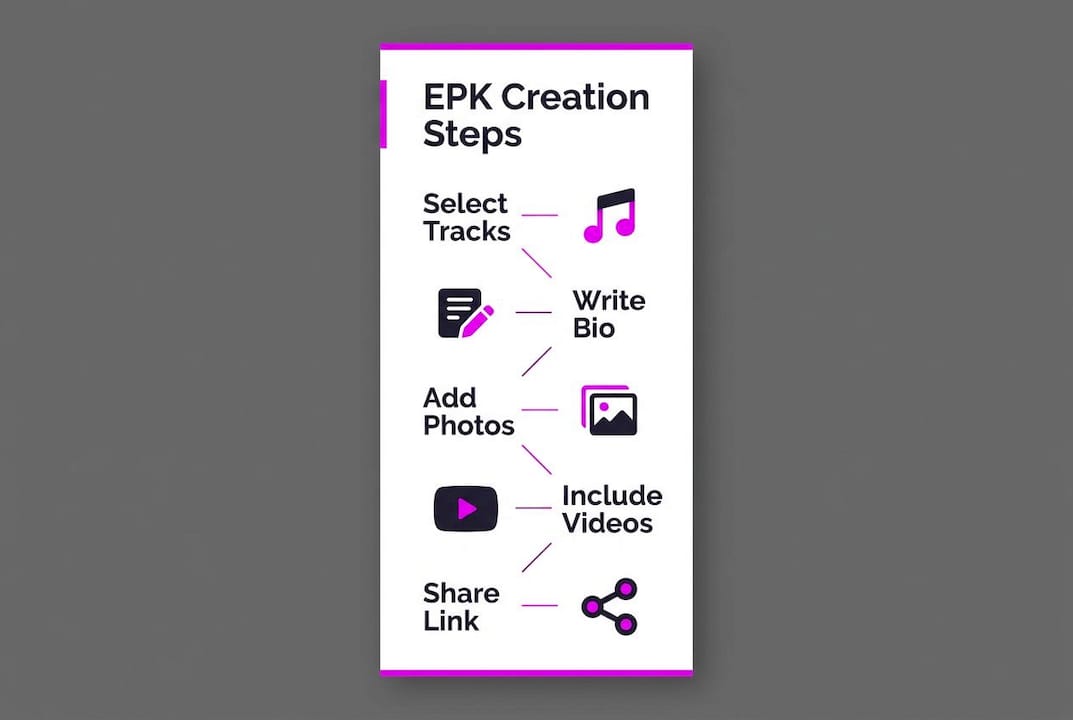
Building your EPK is a nine-step process. Each step builds on the last, so work through them in order.
- Gather and curate your tracks. Pull your full catalog and pick the 5–10 songs that best represent where you are right now. Recency matters. A track from three years ago that no longer fits your sound should stay off the kit.
- Write your artist bio. Aim for 150–200 words. Open with your sound, not your origin story. Name a recent milestone, such as a notable show, a sync placement, or a release that gained traction. Close with what’s coming next.
- Select your photos. You need at least one clean, high-resolution press shot with a neutral or simple background and one live shot that shows energy. If you do not have professional photos yet, this is worth the investment before you launch.
- Compile your video reel. One strong live performance clip is enough to start. It does not need to be professionally shot. Good lighting and clear audio from a real show will outperform a studio-produced promo video with no crowd energy.
- Collect press quotes. Pull the strongest line from any review, blog post, or feature you have received. Even a quote from a local music blog counts. Copy the text directly onto your EPK page.
- Set up your contact section. Create a dedicated booking email address if you do not already have one. List your Spotify, Instagram, and any other active platforms. Keep this section clean and easy to find.
- Build the page. Choose your platform, pick a clean layout, and set a custom URL slug that matches your artist name. Match the color palette to your existing branding without overcomplicating it.
- Test on multiple devices. Open your EPK on a phone, a tablet, and a desktop. Check that audio plays inline without redirecting, that photos load quickly, and that the contact info is easy to tap on mobile.
- Share it everywhere. Add the link to your email signature, your social media bios, and every pitch you send. Replace any old PDF press kits with this link immediately.
“An EPK that loads quickly and presents information clearly doubles as a pitch tool. The music quality gets you in the room. The EPK gets you the meeting.”
Common mistakes to avoid: Long bios that read like a biography book, attaching PDFs instead of sharing a link, embedding audio that requires a separate app to play, and burying the contact info at the bottom of a long page.
Pro Tip: Before you send your EPK to anyone, have someone outside the music industry open it on their phone and tell you what they notice first. If it is not your music or your photo, restructure the page.
For a broader look at how your EPK fits into your overall release strategy, the guide on how to release an EP covers the full picture.
How do you keep your EPK current and effective?
An EPK is not a one-time build. It is a living document that reflects where you are right now, not where you were two years ago. A stale EPK signals to booking agents that you are not actively working.
Update these elements on a rolling basis:
- Music tracks. Swap in new releases as they come out. Remove anything that no longer represents your current sound.
- Bio. Refresh it every time you hit a meaningful milestone. A new tour, a sync placement, or a significant streaming milestone all deserve a mention.
- Photos. Replace press shots annually or after a significant image change. Outdated photos create a disconnect when someone meets you in person.
- Press quotes. Add new mentions as they come in. Prioritize quotes from recognizable outlets or writers, but any positive press is worth including early in your career.
- Streaming stats. If your numbers are growing, include them. Monthly listener counts and total streams signal momentum to promoters.
Pro Tip: Schedule a quarterly EPK review on your calendar. Treat it like a business task, not a creative one. Thirty minutes every three months keeps your kit sharp and current.
Using EPK analytics to track who opened your kit and what they played gives you real data to guide follow-up outreach. If a promoter opened your kit but did not respond, you know they saw it. That changes how you write your follow-up email. For deeper reading on music business strategies that complement your EPK, there is a full library of articles worth exploring.
Key Takeaways
A professional EPK is the single most important promotional tool an independent musician can have, because it puts your music, image, and credentials in front of decision-makers in one fast-loading link.
| Point | Details |
|---|---|
| Music plays inline | Inline audio is non-negotiable; forcing listeners off the page kills bookings immediately. |
| Bio stays under 200 words | Focus on sound, recent wins, and what’s next. Skip the life history. |
| Video outweighs audio alone | Even a phone-shot live clip dramatically increases your perceived professionalism. |
| Update it quarterly | A stale EPK signals inactivity; refresh music, bio, and photos on a schedule. |
| Analytics guide follow-up | Track who opens your kit and what they play to time your outreach effectively. |
Why your EPK is your most underrated business tool
I have worked with independent artists long enough to see the same pattern repeat. A musician spends months perfecting a record, then sends a booking agent a Dropbox link and a three-paragraph email. The agent moves on in eight seconds. The music was good. The presentation was not.
The uncomfortable truth is that an EPK is often the deciding factor between getting a gig and being ignored, regardless of music quality. That is not fair, but it is the reality of how busy industry professionals operate. They are scanning dozens of artists. Your job is to make their decision easy.
Most artists I see make the same mistake. They obsess over design and miss the pitch. A flashy page with confusing navigation and no inline audio loses to a plain page where the music plays immediately and the bio is clear. Simplicity and message clarity beat aesthetics every time.
The other thing I tell artists: your EPK is not just for booking agents. It works for playlist curators, music supervisors, podcast hosts, and press writers. Any time you need to introduce yourself professionally, that link does the work. Build it once, keep it current, and let it open doors you did not even pitch for.
— Kreg
Twisbyrecords can help you put your best sound forward
Your EPK is only as strong as the music inside it. A polished, professionally mixed and mastered track tells booking agents and music supervisors that you take your craft seriously before they read a single word of your bio.
Twisbyrecords has spent over 35 years helping independent and DIY artists get a professional sound without the overhead of a major-label budget. With Apple Digital Masters certification and a track record of fast turnarounds, the team works directly with you to make sure your recordings are ready for any opportunity your EPK brings in. Visit the Twisbyrecords services page to see how mixing, mastering, and music advertising can work together to build your presence from the ground up.
FAQ
What is an EPK for musicians?
An EPK, or electronic press kit, is a single-page digital portfolio that includes your music, bio, photos, video, press quotes, and booking contact info. It replaces outdated PDFs and gives industry professionals everything they need in one fast-loading link.
What should I include in my EPK?
Every EPK needs 5–10 playable tracks, a 150–200 word bio, professional photos, a live video clip, press quotes, and a clear booking email. Technical metadata like ISRC codes is optional but valuable for sync licensing opportunities.
How much does it cost to create an EPK?
EPK costs range from $0 using free hosting tools to roughly $5 per month for a dedicated subscription platform. Professional photography and videography are the biggest optional expenses.
How long should a musician’s EPK bio be?
Your bio should be 150–200 words. Focus on your sound, recent achievements, and upcoming projects. Booking agents and promoters make decisions in seconds, so clarity and momentum matter far more than a detailed personal history.
How often should I update my EPK?
Update your EPK at minimum once per quarter. Refresh your tracks, bio, photos, and press quotes whenever you hit a new milestone. A current EPK signals that you are actively working, which is exactly what promoters and booking agents want to see.
Recommended
- What Is An EP? And How To Release One
- Podcast – Twisby Records
- Blog – Twisby Records
- Uncategorized – Twisby Records