
A call to action (CTA) in music is the one thing you ask a listener to do next: pre-save, stream, follow, join your list, buy a ticket. The best ones ask for a single action, give a reason to do it and make it a one-tap move. Below you’ll find examples for every channel, a method for writing your own, and how to tell whether a CTA is working. If you’re running paid ads for a release, we build the ad, the landing page and the reporting around that one ask.
TL;DR
- Ask for one action per post, email or ad. Two asks split attention.
- Match the ask to the relationship: a new listener should hear one song, a longtime fan can buy vinyl or a ticket.
- Make it easy: one link, one tap, ideally a smart link or QR code.
- Use urgency only when the deadline is real, like “out Friday.”
- Judge a CTA by link clicks, saves, signups and purchases, not by likes or reach.
Table of Contents
- What a CTA does for a release
- Music call to action examples by goal
- Match the CTA to the channel and the listener
- How to write your own CTA in five steps
- How to tell if a CTA worked
- Why a CTA is only as good as the track behind it
- Work with us on the release
- FAQ
- Sources
What a CTA does for a release
A CTA is a direct request that tells someone what you want next. Common music examples include listening to the song, buying tickets, joining the email list, pre-saving the album, watching the video or sharing the post. It works as a direction for where fans should go, and it should push them toward something concrete, usually a link click or similar action.
Most musician CTAs fall into four buckets, which one music business blueprint names as Follow, Signup, Purchase and Subscribe. Add Listen and Save and you have the full set an independent artist uses.
A CTA is not a slogan. “Check out my music” is a mood. “Our new single is out now. Listen here.” is a CTA, because the reader knows exactly what happens after the tap.
Music call to action examples by goal
Here are lines you can adapt. Swap in your own song, date and link.
Pre-save and release day
- “Pre-save now, out Friday.” This is a simple pairing of action and date for posts and stories.
- “Our new single is out now. Listen here.” One verb, one link.
- “Hear the new single” or “New song out now!” are short listening prompts that work because they say nothing extra.
What to avoid: “Listen, follow, save it, share it, add it to your playlist and tell all your friends!” That is six asks, and the usual result is none of them.
If you want the full run-up around a pre-save, our Spotify pre-save campaign guide walks through it.
Follow and subscribe
- “Don’t miss a beat. Follow me on Bandcamp.” and “Debut album coming soon. Join my mailing list.” are two release-stage examples that tie the follow to something coming.
- “Follow for the acoustic version next week.” Gives a reason, which is the part most follow buttons skip.
Email list
Email is where your most committed fans live. Bandcamp’s artist guide notes that emails are among the biggest drivers of artist revenue on its platform, and it advises telling fans their direct support helps make the art possible.
Try these:
- “Join the email list for first access to tour dates.”
- “Join my email for an acoustic version and early tickets.” This is a clear value exchange: they give an address, you give something specific.
- A subscribe button on your site that promises first access to news, merch and tour announcements.
Buy: pre-orders, merch and tickets
- “Pre-order on Bandcamp and get exclusive bonus tracks unavailable anywhere else!” Per that same Bandcamp strategy page, the bonus is what makes the ask worth acting on.
- “Tickets go on sale Friday.” Real deadline, real urgency.
- “Sign up for the livestream.” An event CTA that’s specific about the action.
For merch CTAs, the ask only works if the product is ready to ship when the fan taps. If you’re planning tour shirts or event gear, custom event merch printing with a fast turnaround lets you tie the CTA to a show date. For ticket-driven asks, fans comparison-shop, so a CTA that links straight to the official ticket page beats a vague “get tickets” line. Fans also look for ways to pay less for concert tickets, which is a good reminder to put early-bird or presale access in your ask when you have it.
Live shows
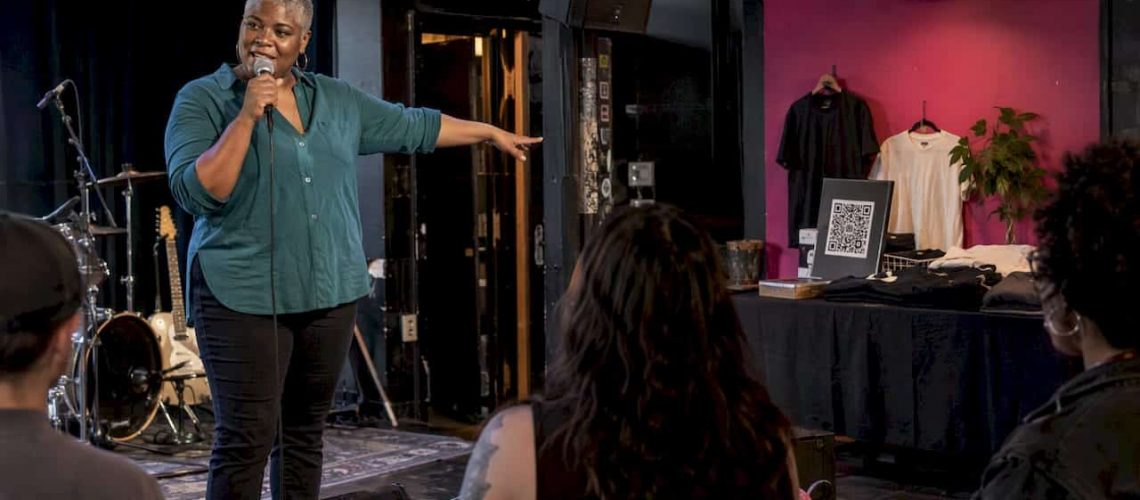
A QR code on a poster, merch table or screen that points to a smart link is the easiest live CTA. The person is already moved by the song. Don’t make them search for you. Add a spoken line from the stage that matches the sign: “Scan this and the new single is in your library tonight.”
Also collect addresses in the room. Gig sign-up sheets and a free unreleased song or exclusive video behind a squeeze page are classic ways to build a list.
Match the CTA to the channel and the listener
The same ask doesn’t fit every place. A longtime fan may buy vinyl, while a new listener will just watch a video or hear one song, and what works in a newsletter may not fit Instagram, TikTok or a streaming campaign.
| Channel | Best single ask | Example line |
|---|---|---|
| Instagram or TikTok caption | Answer a question, or save | “Which lyric hit hardest?” |
| Story | Pre-save or stream | “Pre-save now, out Friday.” |
| Listen, save, reply or forward | “Reply and tell me your favorite track.” | |
| Live show | Scan the code | “Scan to hear it tonight.” |
| Paid ad | Listen Now | “Listen Now” button to Spotify or Apple Music |
Social posts
Use one clear ask per post: a question, a pre-save, a save or a stream. Ask something answerable, like “Which lyric hit hardest?”, and save the direct stream ask until after the story. Low-friction asks such as “Save this if the chorus made you choke up” or “Duet this with your own verse and tag me” invite a response without feeling like a sales pitch.
One way to plan this: context posts lead to listening, proof posts to exploring your catalog, conversation posts to replies, and invitation posts to one clear link. Each post has a job, so each post has one CTA.
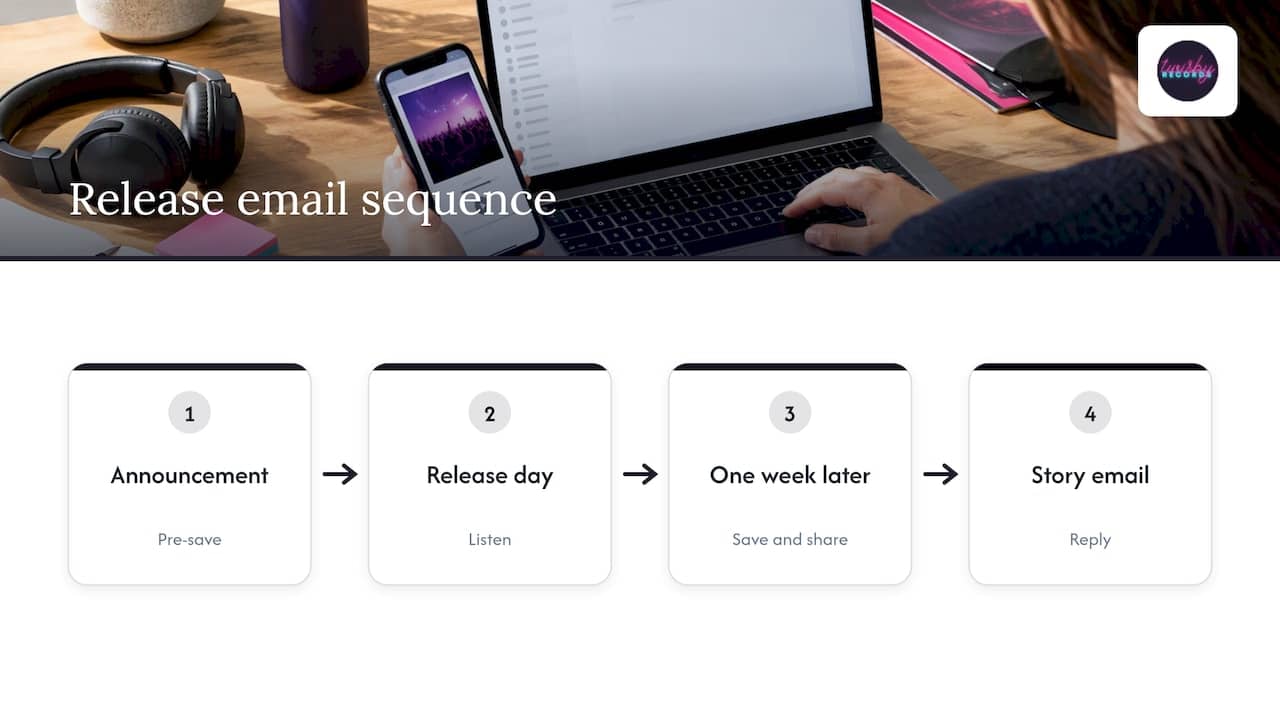
Before you write, finish this sentence: “After this email, I want a listener to ___ because ___.” If the blank holds three actions, split them into separate emails. A release sequence might be: announcement (pre-save), release day (listen), a week later (save and share), then a story email (reply).
Paid ads
Paid ads reach people who have never heard of you, so the CTA is the button and the destination. Meta ads with short song clips and a “Listen Now” button leading to Spotify or Apple Music are a standard release setup, and the same guide notes even $5 to $10 a day can reach new listeners.
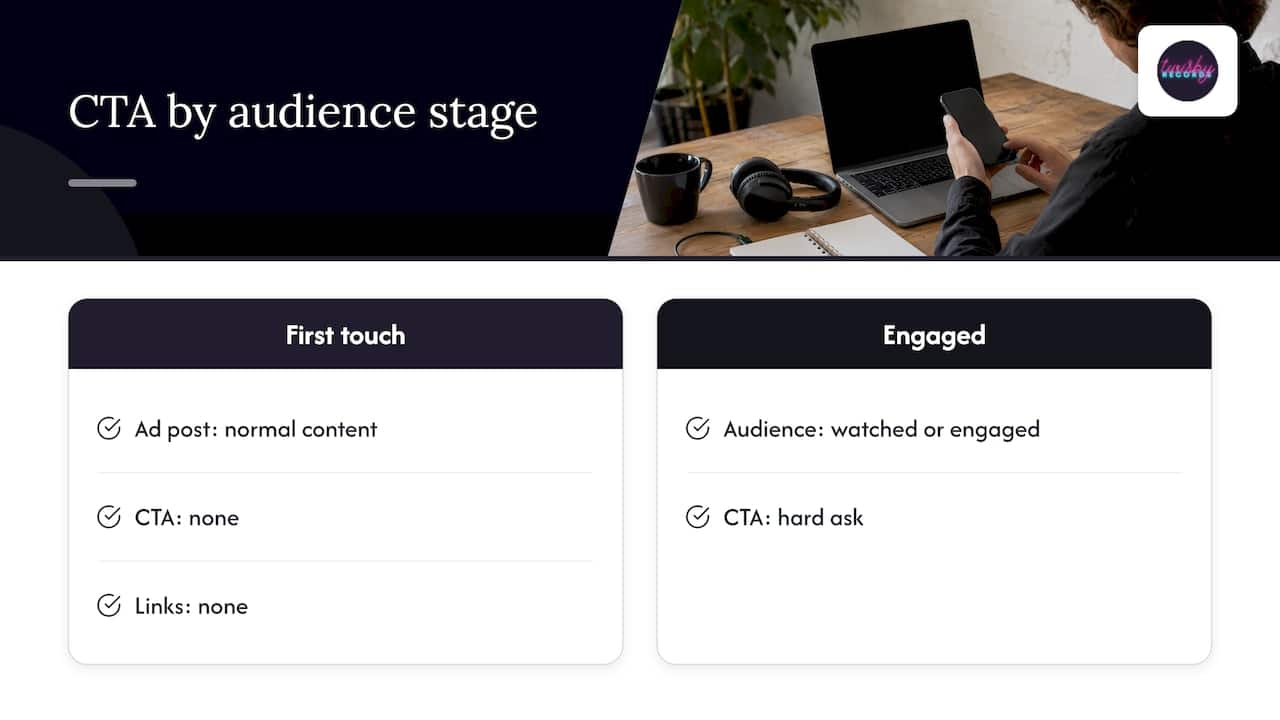
Cold audiences are a special case. For first-touch audiences, the first ad post should look like normal content, with no CTAs or links. Save the hard ask for people who have already watched or engaged. That’s the logic behind a two-step funnel, which we break down in our guide to two-tap funnels that convert clicks to streams.
If you’re deciding where the ad should send people, our Spotify conversion ads checklist covers the setup.
How to write your own CTA in five steps
Here is a five-step method with what each step takes and where it goes wrong.
- Pick one action. Write down what you want the person to do. If you list three things, you have three posts. Where it goes wrong: you try to hit every goal in one caption.
- Give a reason. “Join the email list for first access to tour dates” beats “Join the email list.” Where it goes wrong: the reason is about you (“help me grow”) and not about them.
- Remove friction. Use a direct link or a smart link, not “link in bio, then scroll, then find the third button.” Where it goes wrong: a link that opens a page with six options.
- Add urgency only if it’s real. “Out Friday” and “Tickets go on sale Friday” are true. Fake countdowns teach fans to ignore you.
- Fit the relationship. Ask new listeners for a listen. Ask superfans for a purchase.
For each release, 3 to 5 CTA options usually work best across all your channels, so write a small set and rotate them.
How to tell if a CTA worked
A view, like or repost is not evidence a song found an audience. Social posts should act as a bridge to one music-related action, and you should track profile visits, link activity, music actions, signups and purchases rather than reach alone.
A practical routine:
- Give every channel its own tracked link, so you know which CTA drove which click.
- Compare link clicks to saves or streams. Lots of clicks and few streams means the landing step is leaking.
- Change one thing at a time: the line, the button or the image, not all three.
- Check results after the first week of release, then adjust.
We cover the mechanics in how to track music ad conversions and how to verify Spotify conversion tracking. A shop-side checklist can also help if you sell merch, such as this Shopify marketing checklist for tracking what sales actions follow.
Why a CTA is only as good as the track behind it
A sharp CTA gets the tap. The song has to hold the listener after it. If a new listener hits play from your ad and the mix is muddy or the master is quiet next to the playlist before it, they leave in seconds, and your CTA has paid for a skip.
That’s why we treat release prep as one job: the sound, then the ask. Our mastering is $50 per track, and mixing is quoted per project through the mix quote page. Get the record right first, then spend on the ask.
Our take
I’ve mastered and mixed records for independent artists for a long time, and the pattern repeats. The artist writes a great caption, runs a decent ad, and the song underdelivers in the first ten seconds. Or the song is great and the CTA asks for six things.
We design everything around one clear next step. The sound is handled by real engineers using analog gear, with Apple Digital Masters certification behind the masters. The ad is built around one ask, one landing page and reporting you can read.
Pick the action. Make the song ready for it. Then measure what happened.
Kreg
Work with us on the release
If you’re releasing music and want the sound and the campaign handled together, we can help. Mastering is $50 one-off. Our advertising packages start with a one-time onboarding fee of $99. The Standard package is $25 per month plus a 20% monthly fee on ad spend, and Premium is 20% per month of ad spend. Facebook and Instagram campaigns come with audience research, a custom landing page, reporting and optimization for streaming growth.
For a deeper plan around timing, see our 2026 music release strategy guide.
FAQ
What is a good call to action for a new song?
“Our new single is out now. Listen here.” is hard to beat. It has one action, one link and a clear moment. Before release, swap in “Pre-save now, out Friday.”
How many CTAs should one post have?
One. A question, a pre-save, a save or a stream each work, but two asks split attention. If you have more to say, make another post or send another email.
Should every post have a link?
No. For cold audiences, the first ad post can simply be good content, with the link ask coming once people have engaged. On warm channels like email, the link is the point.
What should my CTA ask for on social media?
Ask for something easy and answerable, like which lyric hit hardest or a save, and keep the direct stream or pre-save ask for after the story. Low-friction asks tend to get more replies than hard sells.
How do I know if my CTA is working?
Watch link clicks, saves, streams, email signups and purchases, not just views and likes. Use a separate tracked link for each channel so you can see which line drove the action.
Sources
- How to Write a Call to Action That Gets Fans to Act
- How to Add a Call to Action in the Music Business
- Turn Fans into Fortune with this CTA Blueprint for Musicians
- Pre-Save Campaigns and Smart Links for Musicians
- Bandcamp + Streaming: Album Release Strategy
- Artist Guide | Bandcamp
- How to successfully launch and market a single release
- Marketing & Social Growth
- How To Market Your Music | DIY Musician
- How to Write Music Captions: Hooks, Hashtags and Examples
- Music Release Email Sequence: What to Send Before and After
- The Modern Independent Streaming Artist’s Guide
- Order Custom Event Merch with Fast Turnaround
- Cheap Concert Tickets: 12 Tips to Pay Less
- Shopify marketing checklist: actionable steps to boost sales