

Mixing a single song typically runs $100 to $1,200, with most independent artists landing between $150 and $500 per track depending on the engineer’s experience and typical U.S. pricing tiers. Mix and master bundles usually add $50 to $150 for mastering on top of that. If your song needs competitive, radio-ready polish, lean toward a mid-to-pro tier engineer rather than the cheapest quote you find. Keep reading for the full breakdown by tier.
TL;DR:
- Professional engineers commonly charge $750 to $1,200 per song, while top tier engineers are usually reserved for a campaign’s lead single.
- Editing and tuning may cost extra, while revisions beyond the package limit run $25 to $100 each; confirm both before accepting a quote.
- Bundles can simplify communication, but mix revisions may count against mastering changes too; choose a separate specialist for a label or playlist loudness target.
- A four to six track EP may cost $1,000 to $2,500 at mid tier, and booking tracks together may qualify for per song discounts.
Table of Contents
- Mixing Price Tiers: Entry, Mid, Pro, and Top-Tier
- What Affects the Price: Cost Drivers Behind Every Quote
- What Mixing Packages Include and Common Extras to Expect
- Mix + Master Bundles: How Bundling Changes the Math
- How to Prepare Your Session to Lower Cost
- How to Request and Compare Quotes
- Sample Budgets: Single, EP, and Album
- What Matters Most When Budgeting for a Mix
- Get a Mixing or Mastering Quote From Twisby Records
- FAQ
- Sources
Mixing Price Tiers: Entry, Mid, Pro, and Top-Tier
Every mixing quote falls into a rough tier, and knowing which one you’re looking at tells you what to expect before you even open the contract.
- Entry level: Newer engineers building a portfolio, often working from a home studio with a smaller plugin arsenal. Expect solid basic mixes but fewer rounds of revision and less experience with complex arrangements.
- Mid-level: Credited, working engineers with a client history and a more developed ear for balance, depth, and genre-specific polish.
- Professional: Full-time engineers who mix for a living, often with better acoustic treatment, analog gear, and faster turnaround on revisions.
- Top-tier: Name engineers with major label or chart credits, usually reserved for artists with label budgets or a specific sonic signature in mind.
A widely cited industry breakdown puts full-time professional mixing at $750 to $1,200 per song, with the broader range stretching from $500 to $2,000 depending on genre and session complexity, according to pricing data from Artyphonic.
For most DIY artists releasing singles or EPs, the mid-level tier delivers the best balance of quality and cost. You’re paying for a trained ear and consistent workflow, not a name on a resume. Save the top tier for a lead single you’re betting a campaign on, and treat entry-level engineers as a place to build a relationship with someone whose sound you like, not a permanent ceiling on your budget.
What Affects the Price: Cost Drivers Behind Every Quote
A mixing quote isn’t a flat number. Engineers price based on how much time and risk your session adds to their schedule.
- Track and stem count: Sessions with dense, layered arrangements can trigger overage fees beyond a base per-song rate.
- Editing and tuning needs: Untuned vocals or unquantized drums may add editing fees, or lead the engineer to mix around the issues instead of fixing them, according to pricing guidance from Tools 4 Music.
- Turnaround and rush requests: Standard turnaround keeps costs predictable; asking for rush delivery or an attended session usually costs extra.
- Revision rounds beyond the included limit: Packages may include a set number of revision rounds, and going past that can add line-item fees.
- Session cleanliness: A disorganized session with unused takes and unlabeled tracks forces the engineer to spend unpaid time just sorting files before mixing even starts.
Mixing engineers tend to work in extended, deadline-driven bursts, and a late or messy stem delivery can disrupt the engineer’s workflow and push your project back, according to career guidance from Berklee.
Pro Tip: Ask upfront whether editing and tuning are included in the base price or billed separately. It changes the real cost of a “cheap” quote fast.
What Mixing Packages Include and Common Extras to Expect
A standard mixing package often includes a final stereo bounce, revision rounds, and delivery in common formats like WAV or AIFF. Stem requirements vary: some engineers want everything split by instrument, others accept grouped stems.
Beyond that baseline, extras show up on nearly every quote:
- Editing (comping, timing fixes): Fees depend on how much cleanup is needed.
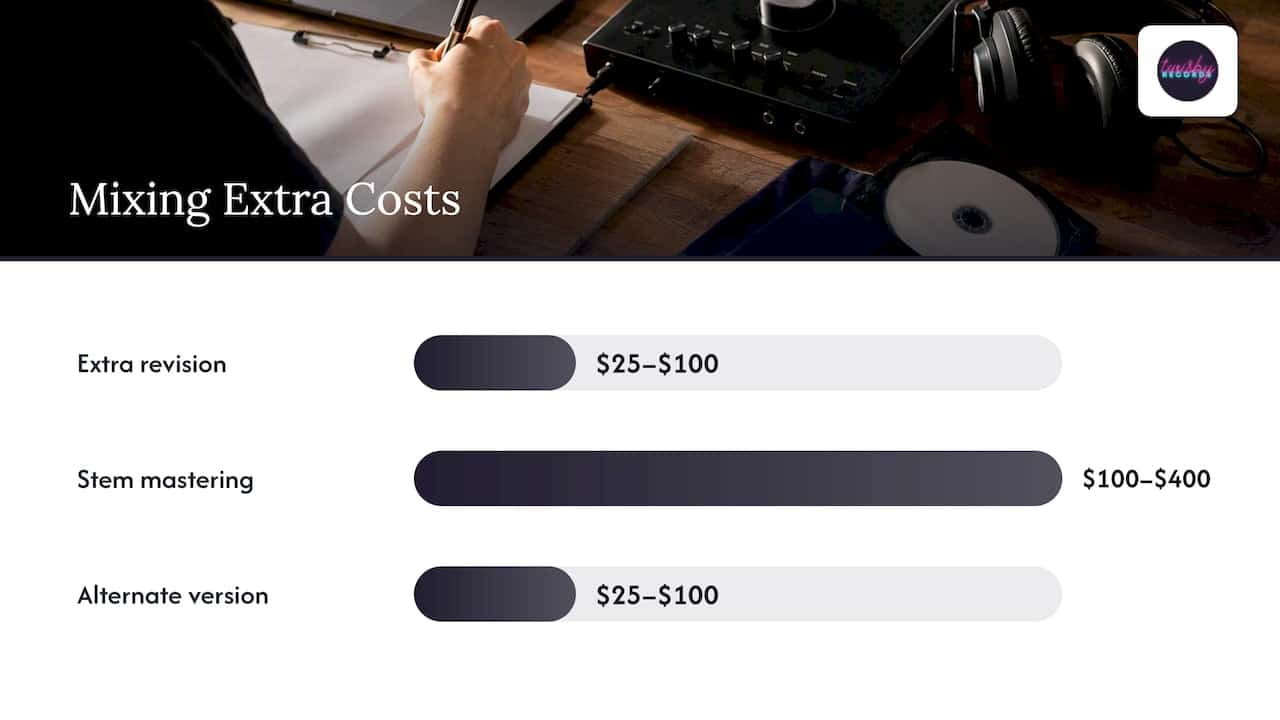
- Additional revision rounds: Usually $25 to $100 per round past the included limit.
- Stem mastering: Often $100 to $400 when you need mastered stems instead of just a final mix.
- Alternate versions (instrumental, radio edit, acapella): Commonly $25 to $100 per version.
Before you accept a quote, check three things: how many revisions are specified in writing, how files get delivered (download link versus cloud folder with an expiration date), and what the engineer means by “mix-ready” stems, since that definition affects whether you’ll owe an editing fee. Our breakdown of how mixing and mastering get priced walks through these line items in more detail.
Mix + Master Bundles: How Bundling Changes the Math
Bundling mixing and mastering together usually saves you a bit compared to booking them separately, since the mastering engineer works from a mix they already understand rather than starting cold. A bundle may cost less than booking mixing and mastering separately, but the total depends on the engineer’s rates and the project scope.
- When bundling makes sense: You want one point of contact, one shared revision policy, and a faster overall timeline.
- When a separate mastering specialist is worth it: You have a specific loudness target for a label or playlist pitch, or you want a second set of ears checking the mix before it’s finalized.
- Shared terms matter: Bundled packages often share a revision count across both stages, so a mix revision can eat into your mastering changes too.
If you’re budgeting per track, our guide on mastering costs for indie artists breaks down mastering costs further.
How to Prepare Your Session to Lower Cost
The cleaner your session arrives, the less time an engineer bills you for cleanup. Work through this before you send anything:
- Export consolidated stems starting from bar one, with consistent sample rates and no missing handles.
- Label every track clearly (lead vocal, BGV, kick, snare) instead of leaving default DAW names.
- Remove unused takes and muted tracks so the engineer isn’t guessing what’s final.
- Supply a reference track along with tempo and time signature for anything with tempo changes.
- Comp and rough-tune vocals yourself when possible. Fine pitch correction is normal to leave to the mixer, but obvious pitch problems usually cost extra to fix.
Pro Tip: Consolidate your files into one folder and write clear, numbered revision notes. Vague feedback like “make it punchier” often triggers an extra round that specific notes would have avoided.
Our post on recording pro-ready stems at home covers the technical side of getting vocals session-ready before you hit export.
How to Request and Compare Quotes
Getting comparable quotes from different engineers means sending the same information to each one and asking the same questions.
- Send stems, a reference track, your target loudness, your deadline, and the release platform so every engineer quotes against the same scope.
- Ask how many revisions are included and what happens once you go past that number.
- Ask who’s responsible for editing and tuning and whether that’s a separate line item.
- Confirm file delivery format and any licensing or ownership terms before you pay a deposit.
- Break the quote into base fee versus add-ons so you can see what’s negotiable and what’s fixed.
Our guide to choosing the right mixing engineer walks through the exact questions worth asking before you commit.
Sample Budgets: Single, EP, and Album
Turning price bands into real numbers makes planning easier.
- Single, low end: A basic mix with no extras costs less than a mix with additional services.
- Single, mid-range: $300 mix plus $100 editing plus $100 mastering, totaling $500.
- Single, high end: A professional mix, mastering, and rush delivery can substantially increase the total.
- EP (4 to 6 tracks): Many engineers offer a per-track discount when you book multiple songs at once, so a mid-tier EP might run $1,000 to $2,500 total instead of five separate full-price bookings.
- Album: Expect a longer timeline, and ask about package pricing upfront since engineers may offer a discount for full-album commitments.
Batching tracks together also gives you leverage to negotiate turnaround and revision terms as a package rather than song by song.
What Matters Most When Budgeting for a Mix
The biggest cost risk isn’t the per-song rate, it’s a vague brief that forces extra revision rounds. We encourage artists to come in with a clear reference track, clean consolidated stems, and feedback saved up for focused revision rounds instead of scattered notes sent over days.
Budgeting a little more upfront for a clean session almost always costs less than a cheap mix that needs a re-do later. Realistic turnaround expectations, communicated early, keep the whole collaboration moving without surprise fees.
— Kreg
Get a Mixing or Mastering Quote From Twisby Records

We handle mixing and mastering for independent and DIY artists who want a polished, personalized result instead of a one-size-fits-all preset chain. Our engineers work to deliver a polished master suited to your project.
If you already know you want mastering on its own, our mastering service is priced at $50. For a full mix, visit our mixing and mastering page to see how we scope a project, and when you’re ready for real numbers on your own tracks, request a mix quote directly.
FAQ
How much does it cost to mix and master a song?
Mixing typically runs $100 to $1,200 per song depending on the engineer’s tier, with most independent engineers charging between $100 and $1,200. Adding mastering usually adds another $50 to $150 on top of that.
How much does 2 hours of studio time cost?
Studio time pricing varies widely by region and gear, and it’s typically quoted separately from mixing and mastering, which are usually priced per song rather than per hour. Ask any studio or engineer for their specific hourly or session rate rather than assuming a standard figure.
Is mixing with the Masters worth it?
Paying for a professional mix is generally worth it when you want a result that holds up against commercially released music, since experienced engineers bring trained ears and consistent workflows that are hard to replicate with presets alone. The value comes more from the engineer’s judgment than from expensive gear, according to Grammy.
Does a producer get 50% of a song?
Producer splits vary by agreement and aren’t tied to a fixed percentage; they depend on the specific contract between the artist and producer. Mixing engineers are typically paid a flat fee or hourly rate for their work rather than taking a percentage of the song itself.
What can I do before sending my session to lower the mixing cost?
Export consolidated, clearly labeled stems, remove unused takes, and provide a reference track along with tempo information. Clean sessions take less engineer time to prepare, which keeps your quote closer to the base rate instead of triggering editing fees.
Sources
- How Much Does It Cost to Mix a Song in 2026? | Tools 4 Music Blog | Tools 4 Music 2026
- Mixing Engineer | Berklee
- Mixing and Mastering Prices 2026: What Engineers Charge | Artyphonic