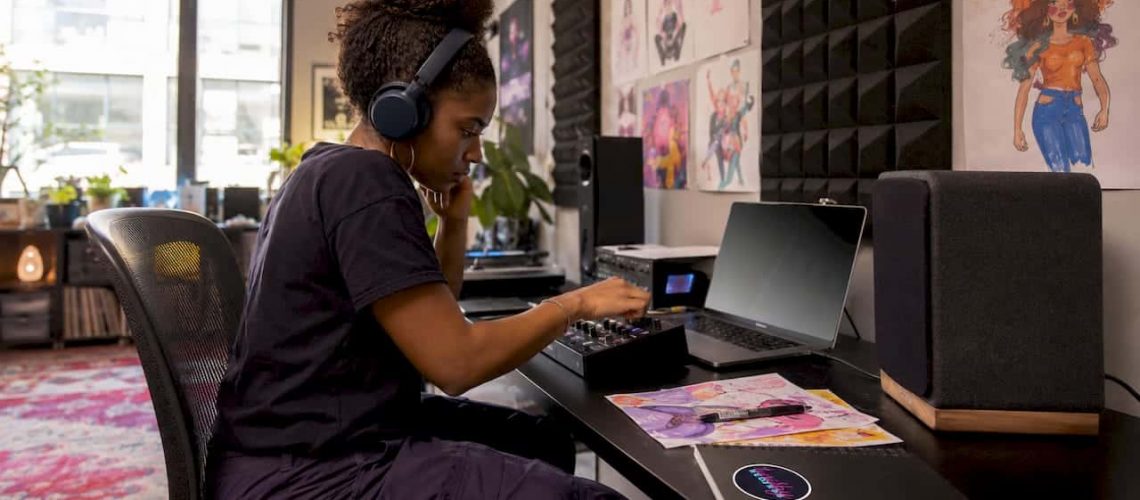

Effective home studio mixing comes down to three things: accurate monitoring, disciplined gain staging, and a repeatable workflow. You don’t need a $50,000 room. You need the right process and gear matched to your space and budget.
Here’s what a solid home mix requires:
- A DAW (Pro Tools, Logic Pro, Ableton Live, or any of the top options) as your core workspace
- An audio interface to convert analog signals cleanly to digital
- Accurate monitoring: open-back headphones, studio monitors, or both
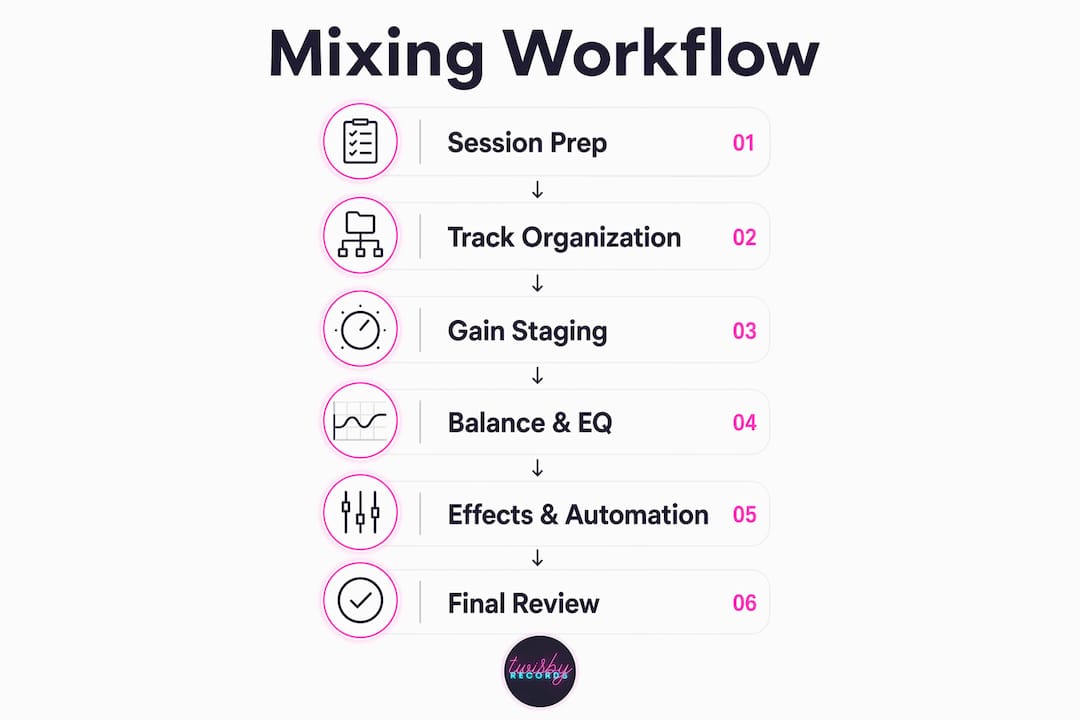
- Organized sessions with proper gain staging before any plugin touches the signal
- EQ, compression, and spatial effects applied in a logical sequence
- Reference tracks loaded and volume-matched throughout the session
- A final translation check across multiple playback systems
Professional results at home are achievable. The gap between bedroom mixes and commercial releases has narrowed significantly, and in 2026, the workflow matters more than the room size.
How do you build a home studio on a budget?
You don’t need to spend thousands to get started. Prioritize ruthlessly: the audio interface and headphones matter more than acoustic panels in the first month.
- Choose your space. Pick the quietest room with the most soft furnishings. Carpet, bookshelves, and a couch absorb reflections better than bare walls. You’re not building a recording booth; you’re reducing the worst acoustic problems.
- Get an audio interface. A solid entry-level interface runs $100–$200. The Focusrite Scarlett Solo and PreSonus AudioBox USB 96 both deliver clean preamps at that price point. Check honest gear recommendations before buying.
- Choose your DAW. Most DAWs include usable stock EQ, compression, and reverb. Start with what you have before buying plugins.
- Pick your monitors or headphones. Studio monitors need acoustic treatment to be accurate in a bedroom. Open-back headphones with calibration software often outperform untreated room monitors at a fraction of the cost.
- Add basic acoustic treatment. Bass traps in corners and a reflection filter behind your microphone handle the most damaging frequencies first.
Pro Tip: Open-back headphones paired with Sonarworks SoundID Reference give you a flat, calibrated monitoring environment without treating your room. For most home producers, this is the most cost-effective monitoring upgrade available.
What are the essential mixing techniques for home producers?
Good technique closes the gap between a home mix and a professional one faster than any gear upgrade. These are the moves that actually matter.
- Gain staging first. Bring every track’s clip gain to an average of –18 to –12 dBFS before any plugin processes the signal. This gives your compressors and EQs the headroom they need to work cleanly.
- Use reference tracks. Load a commercially released song in your genre directly into your DAW and volume-match it to your mix. Your ears recalibrate immediately. Using multiple references across different genres also teaches you broader tonal balance.
- High-pass filter everything except kick and bass. Cut vocals below 100 Hz, guitars below 150 Hz, and synth pads below 80 Hz. Low-end rumble is invisible on meters but destroys headroom and muddies the mix.
- Sidechain compress kick and bass. Set the bass compressor to duck by 2–3 dB every time the kick hits. The two elements stop fighting for the same space, and the low end suddenly sounds intentional.
- Parallel compress your drums. Duplicate the drum bus, compress the duplicate hard, then blend it back under the original signal. You get density without losing the natural snap of the transients.
- Mix at conversation volume. Calibrate your monitoring level to around 70–75 dB SPL. Your ears make better decisions at that level, and you’ll last longer in a session without fatigue distorting your judgment.
Pro Tip: When mixing on headphones, add a crossfeed plugin like Goodhertz CanOpener or TB Isone Pro to your master bus. Headphones present an unnaturally wide stereo image; crossfeed simulates the acoustic blending that happens with speakers and prevents your mix from sounding too narrow on playback systems.
Top home studio mixing and recording services in the US
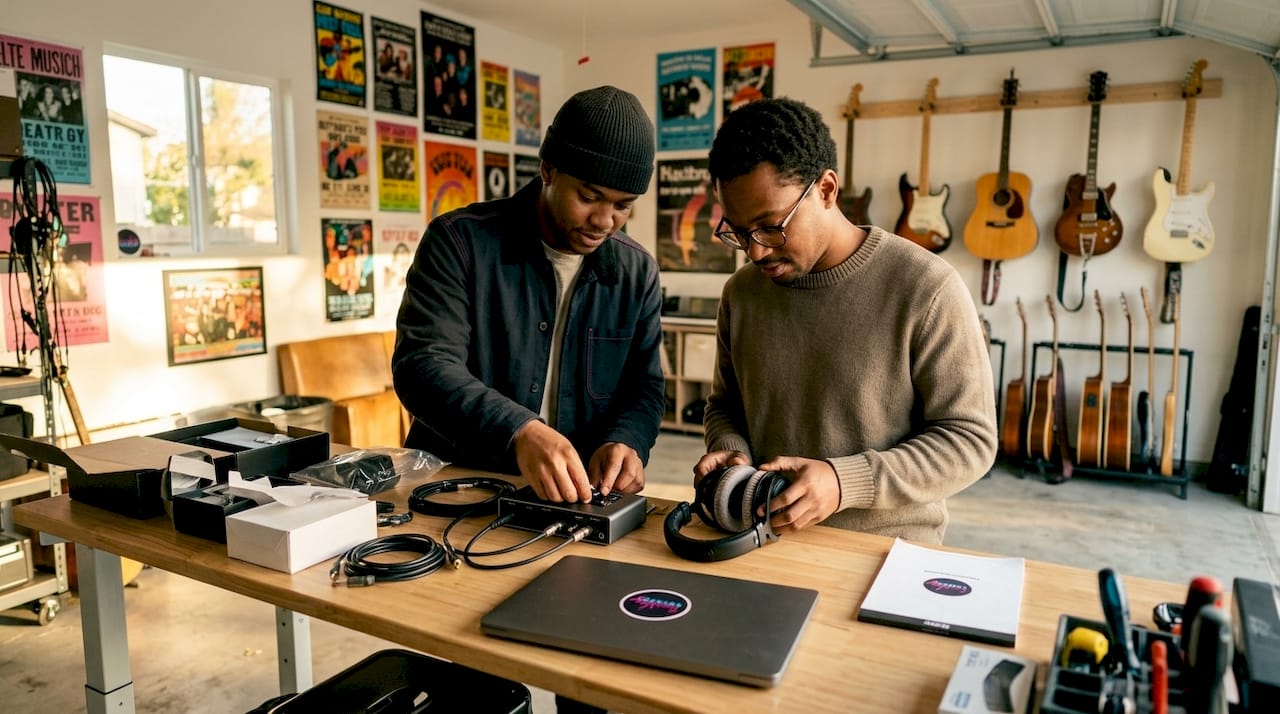
When your own setup hits its ceiling, or when a project demands a professional room, these three US-based studios are worth knowing.
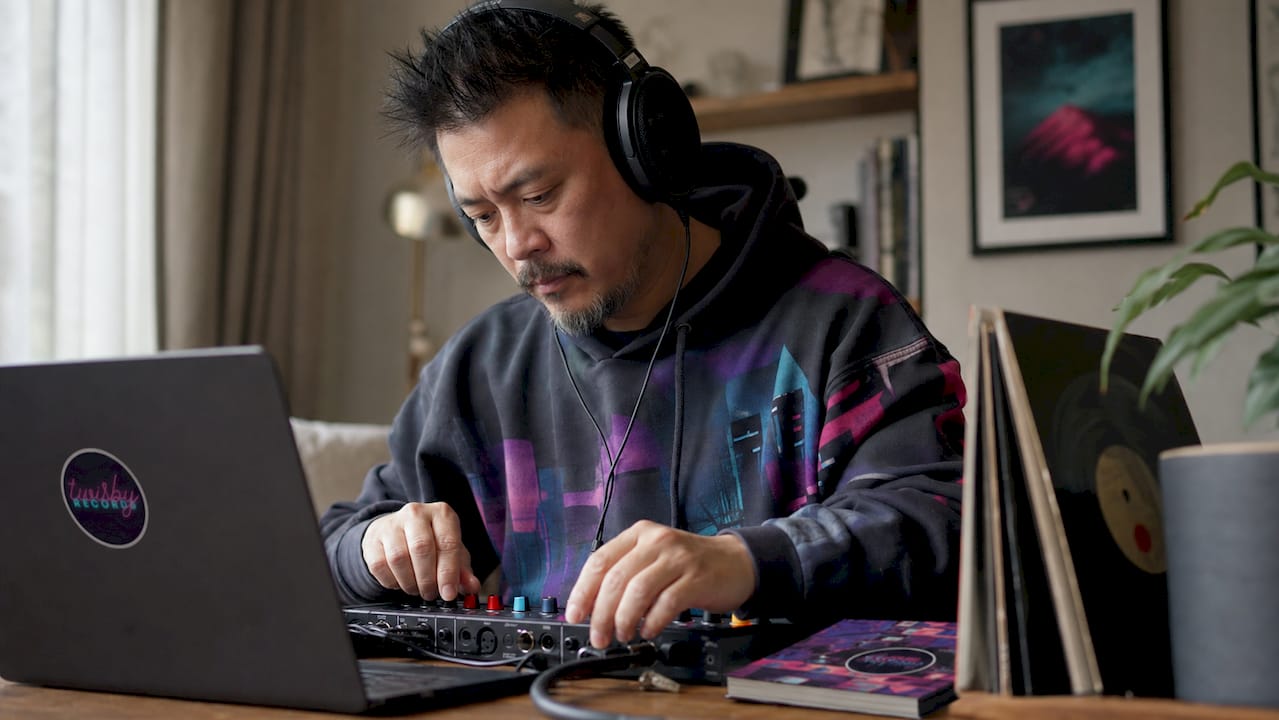
| Studio | Services | Specialization | Best For | Rating |
|---|---|---|---|---|
| Home Room Studios LLC | Recording, mixing, engineering support | Artist-focused sessions, 25+ years experience, Philadelphia | Independent musicians wanting a personable, professional environment with clear hourly pricing | 5★ (246 reviews) |
| The Bunker Studio | Recording, mixing, mastering | Hybrid analog/digital room, Neve consoles, Brooklyn NYC | Musicians needing top-tier analog gear and professional mastering in New York | 4.9★ (82 reviews) |
| Homebrew Studio | Recording, mixing, mastering, overdubs, pre-production | Multi-genre, old-school open room, NW New Jersey near Manhattan | Artists across rock, country, jazz, punk, and folk wanting experienced regional engineers | 5★ (2 reviews) |
Home Room Studios LLC is the most accessible option for independent artists who want professional quality without the intimidation of a large commercial facility. Pricing runs from $120 for a 2-hour block to $500 for a full 10-hour day, with over 25 years of industry experience behind every session. The artist-focused environment is a genuine differentiator for musicians who need to feel comfortable to perform well.
The Bunker Studio operates at the top end of the market. The hybrid analog/digital mix room with Neve consoles puts it in a different class for artists who want that analog warmth baked into the signal chain. It’s the right call for complex productions where the equipment itself shapes the sound.
Homebrew Studio suits artists who want an experienced engineer in a relaxed, open-room setting across a wide range of genres. With over 20 years of regional experience and a location less than an hour from Manhattan, it’s a practical option for New York-area musicians who want to work outside the city.
How do you choose the right mixing service for your project?
The right studio depends on more than price. Here’s what to weigh before you book.
- Sound quality and equipment. Ask for sample mixes in your genre. A studio with Neve consoles and a treated room will handle dense arrangements differently than a project studio.
- Communication and comfort. You’ll spend hours in that room. If the engineer doesn’t listen to your references or dismisses your input, the session will cost you more than money.
- Pricing transparency. Hourly blocks with clear rates (like Home Room Studios LLC’s published pricing) let you budget accurately. Vague “project quotes” can balloon.
- Experience in your genre. A jazz engineer and a metal engineer hear differently. Ask directly about their work in your style.
- Turnaround time. For remote mixing, confirm revision rounds and delivery windows upfront. For in-person sessions, know whether the rate includes mixing or just tracking time.
- Remote vs. in-person. Remote mixing gives you flexibility and often lower rates. In-person collaboration catches problems in real time that file exchanges miss.
Reviewing sample mixes before booking is non-negotiable. Any reputable engineer will share recent work. If they won’t, keep looking.
What technical standards should your home mixes meet in 2026?
The benchmarks for professional home mixing are well established. Meeting them means your files are ready for mastering without surprises.
- Record and mix at 24-bit depth and 48 kHz sample rate. This balances audio quality with manageable file sizes and is the default in most modern DAWs for good reason.
- Gain stage every track to –18 to –12 dBFS before any processing. Skipping this step is the most common mistake beginners make, and no amount of EQ fixes a clipped or overloaded signal.
- Keep master bus processing light. A gentle bus compressor at around 1.5:1 ratio with 1–2 dB of gain reduction can glue a mix together. Heavy limiting on the master bus robs the mastering engineer of headroom.
- Target streaming loudness standards. Spotify normalizes to –14 LUFS integrated; Apple Music targets –16 LUFS. Leave 3–6 dB of peak headroom on the master bus for the mastering stage.
- Check mixes in mono. Sum your master bus to mono before finalizing. Wide elements that disappear in mono have phase issues that will cause problems on phone speakers and Bluetooth devices.
Statistic callout: Gain staging to –18 to –12 dBFS before any plugin is the single most impactful technical habit in home mixing. It gives every processor in your chain the headroom it needs to work as designed.
How long does a home studio mixing project take?
A realistic timeline depends on session complexity and revision rounds, but here’s a practical framework.
A straightforward 4-track demo takes an experienced home mixer 2–4 hours from session organization to a finished stereo file. A full-band recording with 20–30 tracks typically runs 8–16 hours spread across multiple sessions, including reference checks and revisions. Factor in at least one overnight break before your final listen; ears reset after sleep in ways that a 10-minute break cannot replicate.
For remote professional mixing, most engineers quote 3–5 business days for a standard song, with 2 revision rounds included. Complex productions or tight deadlines often carry a rush fee. Build your timeline backward from your release date and add a buffer of at least one week for mastering after the mix is approved.
DIY mixing vs. hiring a professional studio: which is right for you?
DIY mixing gives you full creative control, zero scheduling friction, and the ability to iterate at 2 AM, especially when you follow DIY mix review best practices tailored for independent artists. The tradeoff is a steep learning curve and the very real risk of ear fatigue and perspective loss when you’re too close to your own material. Mixing in the box at home can produce professional results with disciplined workflow, but it takes time to develop that discipline.
Hiring a professional engineer brings fresh ears, calibrated monitoring, and years of pattern recognition your home setup can’t replicate yet. The cost is real, but so is the value on projects where the mix is the difference between a release that lands and one that doesn’t. For independent artists weighing this decision, the case for professional mixing is strongest on your most important releases.
The honest answer: most working independent musicians do both. DIY for demos, singles, and learning. Professional for albums, label submissions, and sync placements.
How do you integrate mixing into your home recording workflow?
The biggest workflow mistake is treating recording and mixing as separate phases that never overlap. In a home setup, keeping them connected reduces friction and preserves creative momentum.
Build a session template in your DAW with tracks pre-labeled, color-coded, and routed to submix buses before you record a single note. When recording is done, gain staging and cleanup happen in the same session file without any export or import step. This means you’re already halfway through pre-mix prep before you’ve consciously “started mixing.”
Check your song prep process before committing to a final arrangement. Decisions made during recording, like mic placement, room sound, and performance quality, determine the ceiling of what mixing can achieve. No plugin fixes a bad take. The mix is where you shape what you captured; the recording is where you decide what’s worth shaping.
Twisbyrecords: expert mixing and mastering for independent artists
If you’d rather hand your tracks to an engineer with over 35 years of experience than spend another weekend fighting your room acoustics, Twisbyrecords offers a direct alternative to the local studio options covered above.
Twisbyrecords specializes in remote mixing, mastering, and music promotion for DIY and independent artists, with Apple Digital Masters certification and a personalized approach that treats every project individually. Unlike a traditional studio booking, there’s no hourly clock running while you figure out your arrangement. You send your files, communicate your references, and get back a polished mix built around your specific sound. Twisbyrecords also offers targeted advertising services for music releases, including Facebook and Instagram campaigns, audience research, and streaming growth optimization, so your mix reaches the listeners it was made for. See the full mixing and mastering services to find the right fit for your next release.
FAQ
What is the best monitoring setup for home studio mixing?
Open-back headphones paired with calibration software like Sonarworks SoundID Reference provide accurate, flat-response monitoring that often outperforms untreated room monitors. Always cross-reference your finished mix on multiple playback systems before finalizing.
What gain staging level should I target before adding plugins?
Target an average clip gain of –18 to –12 dBFS on every track before any plugin processes the signal. This gives your compressors and EQs the headroom they need to work cleanly.
How do I fix a muddy home studio mix?
High-pass filter every non-bass instrument and apply sidechain compression between the kick drum and bass guitar, ducking the bass by 2–3 dB on each kick hit. Those two moves resolve most low-end muddiness.
What loudness target should I aim for when mixing for streaming?
Spotify normalizes to –14 LUFS integrated and Apple Music targets –16 LUFS. Leave 3–6 dB of peak headroom on the master bus for the mastering engineer.
Can Twisbyrecords mix my music remotely?
Yes. Twisbyrecords provides remote mixing and mastering for independent artists across the United States, with Apple Digital Masters certification and personalized service tailored to each project.
Key Takeaways
Effective home studio mixing requires disciplined gain staging, accurate monitoring, and a consistent workflow, whether you mix yourself or hire a professional.
| Point | Details |
|---|---|
| Gain staging is foundational | Target –18 to –12 dBFS on every track before any plugin to prevent clipping and preserve headroom. |
| Headphone mixing is legitimate | Open-back headphones with Sonarworks SoundID Reference often outperform untreated room monitors for home producers. |
| Technical standards matter | Record and mix at 24-bit depth and 48 kHz; target –14 LUFS for Spotify and –16 LUFS for Apple Music. |
| DIY vs. professional depends on the project | DIY works for demos and learning; professional mixing pays off most on your highest-stakes releases. |
| Twisbyrecords for remote mixing | Twisbyrecords offers remote mixing, mastering, and Apple Digital Masters-certified delivery for independent artists across the US. |