
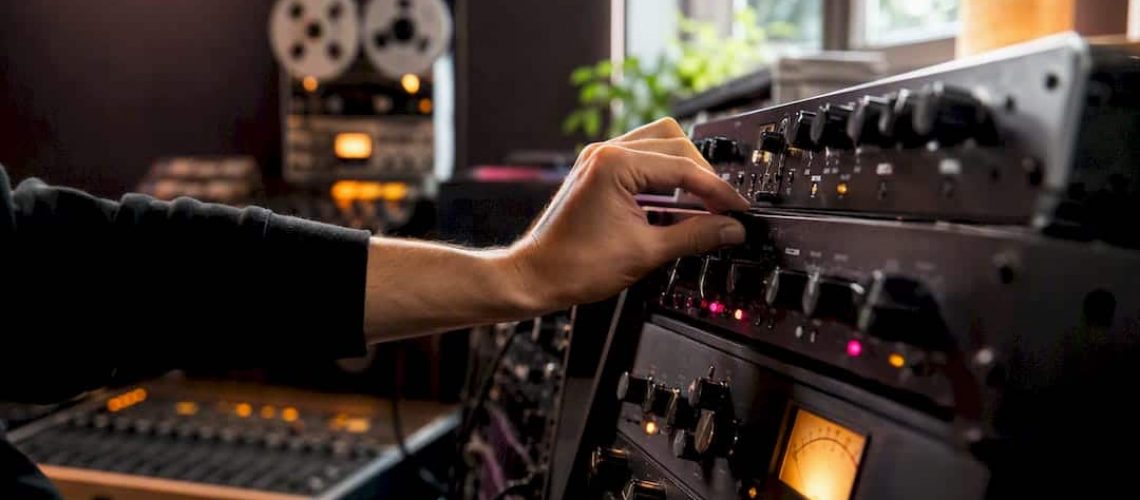

Neither analog nor digital mastering wins outright. Pick digital when you need precision and instant recall, analog when the mix needs color and depth, and hybrid when you want both without compromise. A 0.5 dB boost at 100 Hz in the digital domain does exactly that and nothing more, while running the same signal through an analog chain adds a converter “fingerprint,” subtle harmonics, and a touch of natural warmth that no plugin fully replicates.
Here’s the working default we use at Twisby Records for independent releases:
- Start in-the-box (ITB) for surgical fixes, spectral repair, and loudness targeting.
- Reserve analog hardware for color, low-end weight, and glue on final passes.
- Target -14 LUFS integrated with a -1 dBTP true-peak ceiling for most streaming platform deliveries.
Pro Tip: If you’re unsure which way to lean, master the loud sections digitally first. Then decide if the track still needs analog character once the dynamics are under control.
Key Takeaways
Digital mastering wins on precision and recall, analog wins on harmonic color and cohesion, and most professional releases today land somewhere in a documented hybrid workflow.
| Point | Details |
|---|---|
| Match domain to mix quality | Well-balanced mixes often need only digital precision; thin or disjointed mixes benefit more from analog glue. |
| Watch your loudness target | Deliver masters near -14 LUFS integrated and -1 dBTP true peak for streaming platforms. |
| Converters set the ceiling | A weak converter bottlenecks even the best analog hardware, so prioritize converter quality first. |
| Document every analog setting | Written notes, photos, and session templates make analog passes repeatable for future revisions. |
| Twisby Records builds hybrid by default | Twisby Records chooses ITB, full analog, or hybrid chains based on mix quality, budget, and turnaround needs. |
Table of Contents
- What Is Analog Mastering vs Digital Mastering?
- How Do Analog and Digital Mastering Actually Sound Different?
- Why Do Analog and Digital Mastering Sound Different? The Technical Causes
- What Are the Pros and Cons of Analog vs Digital Mastering?
- How Do Analog and Digital Mastering Behave Under Heavy Limiting?
- How Do You Prepare and Transfer Mixes for Analog or Digital Mastering?
- When Should You Choose Analog, Digital, or Hybrid Mastering?
- Is Analog Really Better Than Digital? Common Myths, Debunked
- How Does Twisby Records Decide Between Analog and Digital?
- A Working Engineer’s Take on Choosing the Right Chain
- How Twisby Records Handles Your Mastering Decision
- Primary Sources and Further Reading
- Sources
- FAQ
What Is Analog Mastering vs Digital Mastering?
Analog mastering runs the audio signal through physical hardware such as tube preamps, transformers, tape machines, or analog compressors and equalizers. If the source is a digital file, the signal passes through a digital-to-analog converter (DAC) on the way in and an analog-to-digital converter (ADC) on the way back out. That conversion round trip is not neutral. It’s where converter quality, clocking, and circuit design leave their mark on the final sound, for better or worse depending on the gear.
Digital mastering happens entirely inside a digital audio workstation (DAW), sometimes called “in the box” or ITB. Every process, from equalization to limiting, operates on discrete audio samples using math rather than electricity moving through circuits. Digital hardware processors (external units that do the math outside the DAW but still in the digital domain) also fall under this umbrella. The defining trait is precision: a digital process does exactly what its parameters say, every single time, with total recall.
Before going further, a quick glossary helps, since these terms show up constantly in any real comparison:
- DAC / ADC: Digital-to-analog and analog-to-digital converters, the gatekeepers between the two domains.
- Line level: The standardized signal strength (consumer or professional) used when routing gear together; mismatches here cause noise and headroom problems.
- Headroom: The gap between your peak signal and the point of clipping or distortion.
- THD: Total harmonic distortion, usually expressed as a percentage.
- LUFS: Loudness Units Full Scale, the standard for measuring perceived loudness across a whole track.
- True peak (dBTP): The actual peak level a signal reaches after digital-to-analog conversion, which can exceed the sample peak you see in your DAW.
Get these definitions locked in now, because every comparison in this guide, from sonic character to workflow logistics, builds on them.
How Do Analog and Digital Mastering Actually Sound Different?
Analog gear tends to add something digital gear doesn’t: harmonic content. Transformers, tubes, and certain op-amp designs generate low-order harmonic distortion, and depending on how hard you drive the circuit, that distortion typically falls in the 0.1% to 1% THD range. That sounds like a flaw on paper. In practice, those harmonics land musically, often at the octave or the fifth above the fundamental, which is why engineers describe the result as “warm” rather than “distorted.”

That same hardware also introduces a subtle compression effect. Iron-core transformers and tube stages naturally soften transients and add a small amount of glue across the mix, thickening the low end in a way that’s hard to describe until you hear it side by side with an ITB version of the same master. Analog also tends to round off the sharpest transient peaks slightly, which is part of why drums and bass often feel “bigger” without necessarily getting louder on a meter.
Digital mastering, by contrast, is transparent by design. A digital EQ move, a compressor threshold, a limiter ceiling: each does precisely what you tell it, sample for sample, with no added color unless a plugin is specifically modeled to emulate analog behavior. Transients stay exactly as sharp as they were recorded. High-frequency detail stays intact without any smoothing. That precision is a strength when accuracy matters more than character, and a limitation when the mix needs a bit of glue that isn’t already there.
Why does a little harmonic distortion make things sound more cohesive while digital precision keeps things separated? It comes down to how the ear parses complex signals. Adding low-order harmonics to multiple instruments running through the same analog bus creates a shared sonic fingerprint across the whole mix, similar to how instruments recorded in the same room share reflections. Digital processing, run track by track or on a stereo bus with no added harmonic content, leaves each element sounding exactly as distinct as it was in the mix. Industry voices like Jonathan Wyner frame this choice as transparency versus character: neither is objectively correct, but the mix in front of you usually tells you which one it needs.
That framing translates into real decision cues by instrument and genre:
- Kick and bass-heavy mixes: Analog saturation on the low end often adds perceived weight without raising peak levels, useful for hip-hop, rock, and bass music.
- Vocals: A touch of analog warmth can smooth harsh sibilance and add presence, but digital precision is often better for surgical de-essing first.
- Dense, layered mixes: Analog glue can unify twenty tracks of overlapping frequencies in a way that’s harder to achieve with digital-only tools.
- Sparse, precise productions: Techno, ambient, and minimal pop usually benefit more from digital transparency, since there’s less to “glue” and more to preserve exactly as mixed.
Pro Tip: Solo the low end (below 150 Hz) when comparing an analog pass against a digital one. That’s usually where the difference is most obvious, even to untrained ears.
Why Do Analog and Digital Mastering Sound Different? The Technical Causes
The sonic differences described above aren’t magic. They trace back to specific, measurable causes in how each domain handles the signal.
Every time audio crosses from digital to analog or back, it passes through a converter, and that converter applies filtering. Reconstruction filters on the DAC side and anti-aliasing filters on the ADC side both shape phase response and can introduce subtle high-frequency artifacts depending on design quality. Cheaper converters tend to have steeper, more aggressive filters that leave an audible signature. Better converters use gentler filter slopes and more sophisticated designs that minimize phase smearing. This is also where clocking enters the picture: if the master clock or word clock sync between devices isn’t rock solid, you get jitter, tiny timing errors that manifest as smeared transients or a subtly harsh top end, and managing that clock relationship is a real engineering discipline, not an afterthought.
Noise floor and headroom work differently in each domain too. Analog gear always has some inherent noise floor from the electronics themselves, plus whatever harmonic content the circuit adds under drive. Digital audio, properly gain staged, has an extremely low noise floor with essentially silent headroom below your peak level. But digital risk shows up differently: truncation from cutting bit depth from a plugin. Push a digital chain into aliasing or clip a lo-fi digital process badly, and the resulting distortion sounds harsh rather than musical, which is the opposite of what most engineers want from a limiter overshoot.
Sample rate and bit depth interact with all of this. Higher sample rates give oversampling algorithms and anti-aliasing filters more headroom to work cleanly, which is why many plugins internally oversample even when your session runs at 44.1kHz or 48kHz. Bit depth affects dynamic range and the noise floor of quantization, which matters most during heavy processing or extreme gain changes.
When you’re evaluating whether to invest in outboard converters, a few specs actually matter more than marketing copy:
| Spec | Why it matters |
|---|---|
| Latency | Determines how much manual delay compensation your session needs |
| THD (total harmonic distortion) | Indicates how much coloration the converter itself adds |
| Dynamic range | Sets the practical noise floor for quiet passages |
| AD/DA symmetry | Consistent conversion quality on both the way in and the way out |
Cheap converters bottleneck expensive analog gear no matter how good the outboard hardware is, since a weak converter link adds unwanted noise or color before the signal even reaches your prized compressor.
What Are the Pros and Cons of Analog vs Digital Mastering?
Analog mastering’s biggest strength is musical saturation you can’t fully fake, plus a workflow that forces decisions rather than endless tweaking. Its downsides are real, though: cost of ownership, difficulty recalling exact settings between sessions, ongoing maintenance, and total dependence on the quality of your conversion chain. A mediocre converter pair can undo the benefit of a beautiful vintage compressor.
Digital mastering’s strengths are precision, instant recall, and affordability, since a strong plugin bundle costs a fraction of hardware and never needs calibration. Some digital tools do things analog simply cannot, like linear-phase EQ, spectral repair, and stem rebalancing after the fact. The downside is that digital-only mastering can feel sterile on dense mixes that need glue, and an unfamiliar interface full of endless plugin options can distract engineers into over-processing.
Hybrid mastering, running digital cleanup first, analog coloration in the middle, then digital limiting to finalize loudness, is how most experienced mastering rooms actually work today. It captures the character of analog without giving up digital’s precision on the final loudness and true-peak stage. The catch is technical: you need accurate latency compensation for the round trip through your converters, and you need to document your hardware settings carefully since analog gear doesn’t recall itself.
| Approach | Sound character | Recall & flexibility | Cost & access |
|---|---|---|---|
| Analog | Warmth, harmonic glue, weight | Manual notes required, harder to reproduce exactly | High: hardware, maintenance, studio time |
| Digital | Transparent, precise, clean | Total recall, instant revisions | Low to moderate: plugin licenses |
| Hybrid | Best of both, depends on execution | Partial recall, documentation dependent | Moderate: mix of both costs |
If buying converters and outboard gear isn’t in the budget yet, renting analog studio time for final passes is often the more sensible move than a partial hardware purchase that still needs a mediocre converter to function.
How Do Analog and Digital Mastering Behave Under Heavy Limiting?
Push an analog chain hard and it tends to clip in a way listeners often describe as musical rather than broken; tape saturation and tube stages compress gradually rather than slamming into a hard wall. Push a digital limiter too hard, and you get precise, absolute control over the ceiling, but dynamics can flatten into a squashed, fatiguing result if you’re not watching gain reduction closely.
This matters more than ever because streaming platforms normalize loudness. A common, practical delivery target is -14 LUFS integrated with a -1 dBTP true-peak ceiling for many major streaming services. Master hotter than that and the platform simply turns your track down, meaning all that extra limiting bought you nothing but reduced dynamics.
Given that reality, here’s when each approach makes sense:
- Use analog saturation and gentle converter drive to add perceived loudness and density before you ever touch a digital limiter hard.
- Reserve heavy digital limiting for the final, precise trim to your loudness target, not as your primary tone-shaping tool.
- Save coloration decisions for after you’ve confirmed the track will land close to your LUFS target, since pushing analog too early can force you to undo character later just to hit spec.
Pro Tip: Check your true peak reading after any limiting pass, analog or digital. Inter-sample peaks can exceed 0 dBFS even when your meter looked clean going in.
How Do You Prepare and Transfer Mixes for Analog or Digital Mastering?
Getting a mix in and out of an analog chain cleanly comes down to file specs, timing, and documentation. Get any of these wrong and you’ll hear it, usually as phase smearing, low-end mush, or a level mismatch that undoes half the benefit of the hardware you’re paying for.
For file specs, deliver the highest quality your mix session actually supports, typically 24-bit at your project’s native sample rate, with at least 3 to 6 dB of headroom below zero on your master bus. Avoid mixing with a limiter already slammed on the master; that removes the exact headroom an analog chain needs to work with. For most independent projects, a stereo bounce is sufficient. Full DAW sessions matter more when the mastering engineer needs to solve mix-level problems, not just polish level and tone, since choosing the right approach depends heavily on mix quality to begin with.
Latency is the next trap. Every AD/DA round trip through outboard gear introduces some delay, and if your DAW’s delay compensation isn’t set correctly, you can get subtle phase cancellation when blending a wet analog return against a dry digital signal. Check your converter’s documented latency and verify your DAW compensates for the full round trip, not just one direction.
Clocking deserves the same attention. Choose one master clock source, sync every device’s word clock to it, and avoid daisy-chaining cheap adapters that introduce ground loops or hum. A ground loop can quietly raise your noise floor by several dB without ever showing up as an obvious problem until you solo a quiet section.
Documentation and recall separate professional analog work from guesswork. At Twisby Records, every analog setting gets logged: written notes on gain staging, photos of hardware front panels showing exact knob positions, and session templates that map each analog pass back to its digital source file. That discipline is what makes analog mastering repeatable instead of a one-time accident you can’t reproduce for a client’s next single.
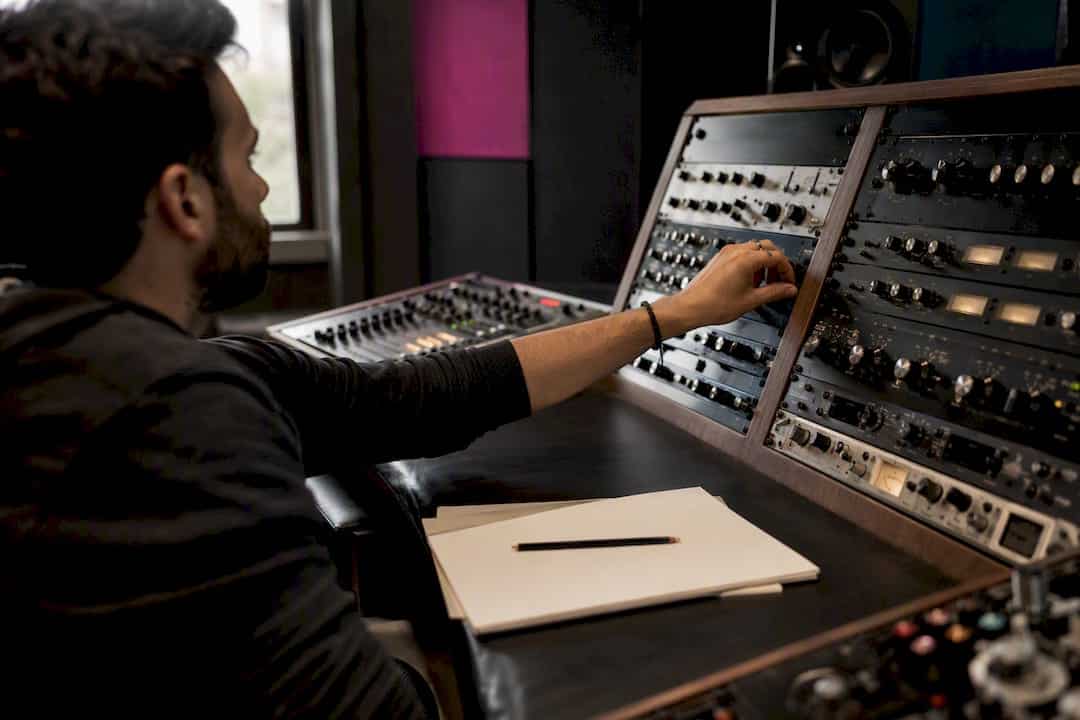
Pro Tip: Use detented knobs on any analog gear when they’re available. A 0.5 dB step you can see and log is a setting you can actually recreate six months later.
When Should You Choose Analog, Digital, or Hybrid Mastering?
The right chain depends on genre, budget, and where the release is headed, not on ideology about which domain sounds “better.”
Rock, acoustic, jazz, and a lot of indie music tend to benefit from analog color, since these genres often already lean on warmth and cohesion as part of their identity. EDM, techno, and precision-driven pop usually favor digital transparency instead, since the production itself is already engineered for surgical clarity and tight low-end control that coloration can muddy.
Budget matters just as much as genre. If you’re mastering one or two singles a year, renting analog studio time for final passes makes more financial sense than buying converters and outboard gear that will sit idle most months. Once you’re mastering a full catalog regularly, or running a small studio serving other artists, the equation shifts toward ownership.
Release goals change the calculation again. Archival masters, vinyl cuts, and high-resolution releases often justify analog investment because the format itself rewards the added harmonic depth and because vinyl mastering has its own physical constraints that benefit from analog compression behavior. Streaming-only releases, where the final format gets compressed by the platform anyway, often do fine entirely ITB, especially for genres that don’t need extra glue in the first place.
Is Analog Really Better Than Digital? Common Myths, Debunked
“Analog is always better” doesn’t hold up once you actually compare chains on a mix that’s already well balanced. A clean, well-mixed track run through a transparent digital chain can sound just as polished as one that went through hardware, because there’s nothing broken for the analog coloration to fix. The myth persists because people compare a bad digital master against a good analog one, not because analog wins every direct comparison.
“Digital can’t be warm” is equally overstated. Plenty of digital saturation plugins model analog harmonic behavior convincingly enough that most listeners can’t reliably tell the difference in a blind test, especially at normal listening volumes on consumer speakers.
If a master comes back sounding phasey, smeared, or bloated in the low end after an analog pass, check latency compensation first, then check for a ground loop, then check whether the converter itself is simply too noisy for the source material. Most of these issues trace back to setup, not the hardware’s inherent character.
One more common question: should you send a problem back to the mix engineer or try to fix it at the mastering stage? Balance issues, muddy low-mids, or a vocal sitting wrong in the mix belong back with the mix engineer. Mastering can polish tone and loudness, but it can’t rebalance individual elements the way a proper remix can.
How Does Twisby Records Decide Between Analog and Digital?
Every project starts with the mix itself. A clean, well-balanced mix with good low-end control might not need analog color at all; a mix that’s a little thin or disjointed often benefits enormously from a warm analog pass. Client budget, delivery format, turnaround time, and the artist’s stated intent (aiming for a specific reference sound, for instance) all factor into the final call.
In practice, that means: fully digital mastering for artists who need fast turnaround or whose mixes are already tonally strong, a full analog chain for artists chasing a specific vintage or organic sound, and hybrid mastering for most releases in between. Every analog setting gets documented the same way, with written notes and photos, so the exact chain can be reproduced for a client’s next release without guesswork.
That process rests on 35+ years of studio experience and Apple Digital Masters certification, both of which shape how deliverables get prepared and verified before release. Turnaround and revision policies get set per project, but the underlying decision criteria stay consistent from one release to the next.
Pro Tip: Ask your mastering engineer how they document analog settings before booking a session. If the answer is “I remember,” that’s a red flag for any future revision.
A Working Engineer’s Take on Choosing the Right Chain
The gap between what people expect from analog mastering and what actually matters is smaller than the marketing around vintage gear suggests. Most of the audible benefit comes from a handful of well-chosen harmonic and compression stages, not from owning a rack full of hardware. My honest default for most independent releases leans hybrid: clean up and set loudness digitally, then add just enough analog character to matter. For budget-conscious artists, plugins like saturation and analog-style bus compressors get close enough to real hardware that the difference stops being worth the added cost for most streaming-only releases.
How Twisby Records Handles Your Mastering Decision
You don’t have to choose between analog and digital before you even book a session. Twisby Records builds each master around what the mix actually needs, running fully digital passes for artists who need fast turnaround, full analog chains when a track needs that specific harmonic depth, and hybrid sessions that split the difference without adding unnecessary cost.

Send a 24-bit stereo bounce of your final mix with a few dB of headroom intact, and Twisby Records will assess whether your project genuinely benefits from analog time or whether a precise digital pass gets you there faster and cheaper. Releases that need more than a polished master, meaning visibility once the track is live, can also pair mastering with targeted release advertising built around audience research and custom landing pages. Reach out with your mix and release timeline, and get a straight answer on which chain fits your project before committing to either one.
Primary Sources and Further Reading
For deeper technical grounding beyond this guide, these sources cover converter behavior, harmonic distortion figures, and streaming loudness standards in more detail:
- iZotope’s analog vs. digital mastering breakdown covers converter fingerprinting and workflow differences.
- Audient’s tutorial on analog mastering explains transformer and tube coloration in practical terms.
- LordReverb’s comparison guide documents typical THD ranges for driven analog gear.
Always verify converter datasheets and confirm your LUFS metering before any major hardware purchase.
Sources
- Analog vs. digital mastering: what they are and what to know (iZotope community blog)
- Analogue mastering for the digital age (Audient tutorial)
- Analog vs Digital Mastering: 5 Key Differences Explained (LordReverb)
- Velveteen
FAQ
Is analog mastering better than digital?
Neither is universally better. Analog adds harmonic warmth and cohesion, while digital offers precision and instant recall, so the right choice depends on what the mix needs.
Does analog really sound different from digital mastering?
Yes, measurably. Driven analog stages typically produce 0.1% to 1% THD that adds perceived warmth, something a purely transparent digital chain won’t introduce on its own.
Why would an engineer use analog instead of digital mastering?
Analog hardware can add musical glue and low-end weight that’s hard to replicate digitally, and the forced full-playback workflow often leads to more cohesive mastering decisions.
Do artists still record and master in analog today?
Yes, particularly for vinyl releases, archival masters, and genres like rock and jazz that benefit from analog color; most working studios, including Twisby Records, blend analog and digital in a hybrid workflow rather than picking one exclusively.